
The Best Zero Waste Habits that Will Save You Money (While Saving the Planet)
Last week, we talked about zero-waste swaps for beginners. You know, things that you have to buy. Physical objects. Today, let’s talk about eco habits for beginners…or that anyone can implement! I still use these zero-waste habits every single day. I think they are beginner-friendly friendly but they are for sure essentials for a zero-waste life.
These habit changes often cost no money and will actually help you save money over the long run. More on that here. So, let’s live a zero-waste life on a budget and change some of our wasteful habits to be more planet-friendly.
Break up with overconsumption
First and foremost, we have to stop overconsuming. I see so many people, new and advanced, in the zero-waste movement who buy SO much stuff, often justifying these purchases due to the fact that they are eco-friendly. Even the most sustainable product still requires new materials to create, energy to manufacture and ship, and packaging to get to your home. The most sustainable thing is the thing we already own.
We don’t NEED every single zero-waste swap on the market. Of course, we also don’t need all of the non-eco stuff that is marketed to us, too. Our money has power. Use your money to vote for good companies, absolutely, but that is not an excuse to overconsume.
Think before you buy. Do you really NEED that item? How will you use it? Is it just trendy or an impulse?
My favorite “trick” here is to write down an item I want to purchase on some sort of shopping list or dream list. If I consistently think about it, it’s probably something I will use and love for a long time. But if you never think about it again, when you stumble across that list in a few weeks or months, you will know you have just saved yourself a wasteful, impulse purchase that harms your wallet and the planet.
I have more tips for breaking up with overconsumption in this YouTube video or this free downloadable guide.

Image from Squarespace
Reduce food waste
Truly, I think food waste reduction is one of the best things we can do for the planet as individuals. Food waste in landfills creates methane, a greenhouse gas that is around 80 times worse than CO2 and makes up around 11% of greenhouse gas emissions. The best way to stop methane on an individual level is to reduce food waste (and reduce your reliance on animal products…more on that next). No, I am not saying we are to blame or solely responsible, but I am saying that our individual actions matter!
I have many ways to reduce food waste on my socials, but here are some of my favorite tips:
Shop responsibly: again, don’t overconsume! This time, in terms of food. Make a grocery list and stick to it. If you buy too much, find a way to use it up or…
Freeze food: even in the smallest of living quarters (I did this in an RV!), you can use the freezer to prevent food waste. From brown bananas to leftover tortillas to half cans of tomato paste and wilted spinach, the freezer is great for locking in freshness and giving you more time to use that item in a new way down the line
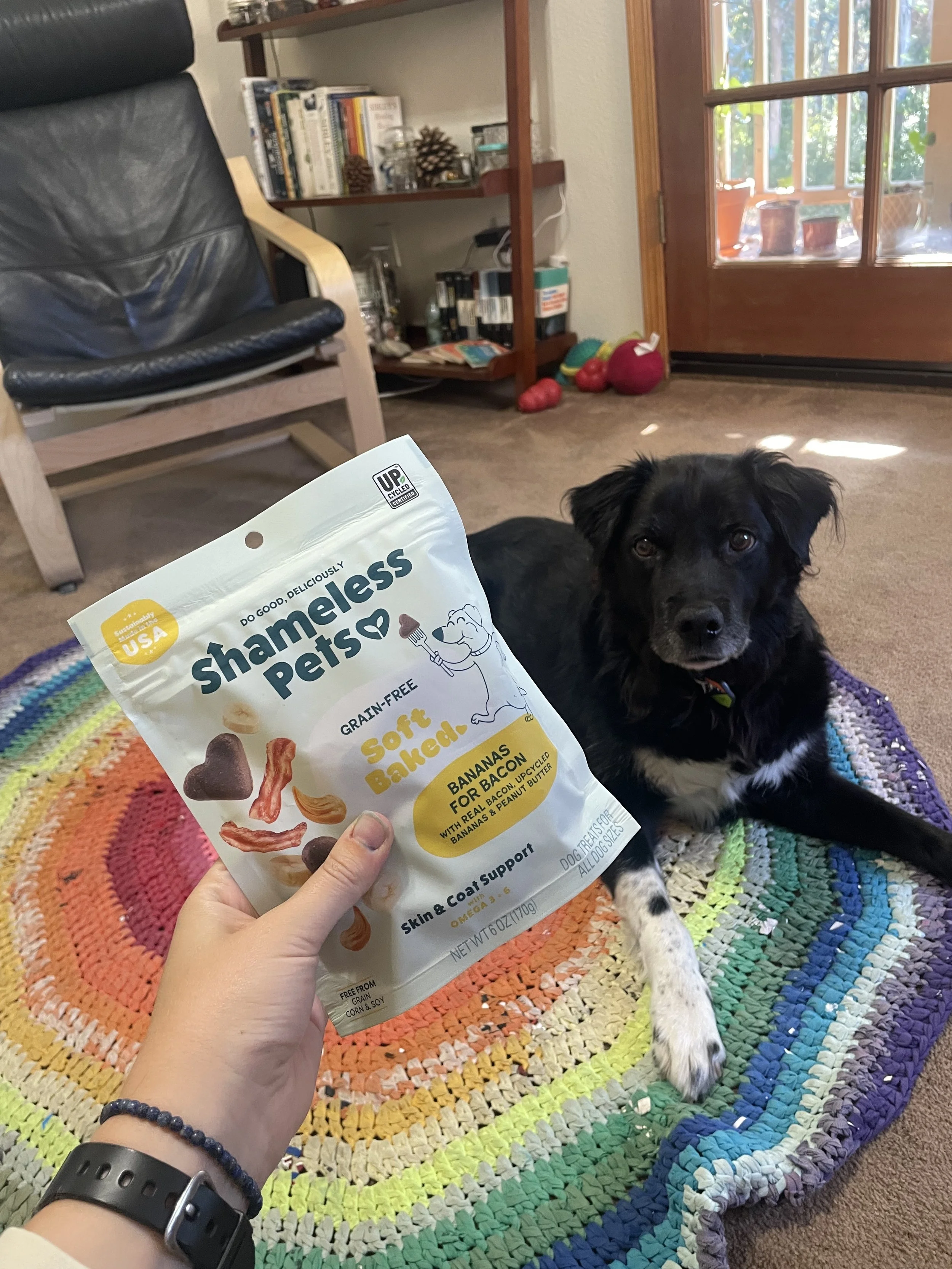
Let your pets help: of course, always consult your vet! But my old pup loves broccoli stems, bruised apples, wrinkly peppers, brown bananas, and floppy carrots. Whatever we don’t eat, he sure will. We do not give him anything rotten, of course. But many critters can help out, from rabbits to chickens to goats and tortoises and more! More tips for living zero waste with pets here.
Learn more about why food waste is so bad for the planet in this video.
Reduce your animal product intake
There are so many environmental benefits to reducing your reliance on animal products. Notice how I didn’t say “everyone has to go vegan, or else!” No. I understand that imperfection is the norm, and also it’s not possible for everyone to go fully vegan due to food deserts and allergies, and the like. Do what you can! If you can make one meal a day vegan or vegetarian, great. Maybe you designate one day a week to being vegan, cool! Whatever works for you. But why?
As we just discussed, it reduces methane emissions. Along with food waste in the landfills, animal agriculture (and fossil fuels) are heavily responsible for methane gas. A great way to divest from these wasteful practices is to stop consuming them where we can.
Animals need a LOT of space. Not just to roam, but also to grow their food! That means deforestation. I’m sure you’ve heard about the Amazon (which, good news, the current leader of Brazil is trying to halt deforestation there!) and other places around the world cutting down trees for soy production. No, that’s not for tofu. It’s to feed cattle.
Animals pollute in other ways! Namely, nitrogen and phosphorus in their waste. These are nutrients that the ground needs, but not in excess. When too much phosphorus or nitrogen ends up in our rivers, it creates algal blooms. The algae thrive, sure, but the rivers as an ecosystem die off due to eutrophication. This deprives plants and animals in the river of oxygen, sometimes killing everything.
More on why eating more plant-based based is better for the planet here.

Compost
Yes, that’s right, we are STILL talking about food waste. It’s important!
At the end of the day, some of our produce will go uneaten and forgotten about in the back of the fridge. And some parts we can’t even eat! What do we do with it? Let’s compost it instead of sending it to the landfill.
Composting is the process of turning organic matter back into nutrient-rich soil. The natural process does NOT create methane. It keeps your kitchen stink-free, reduces how many trash bags you use, and if you garden, now you have free fertilizer!
Yes, I truly believe there is a method for every single person. I’ve lived in apartments, houses, with roommates, and even in an RV, and I always managed to compost. Once you get into the habit, it’s easy, and you truly won’t go back. I do not miss the days of stinky, leaky kitchen trash.
Choose your favorite way to compost from this list of ideas!

Learn how to mend
I think one of the most valuable skills I’ve learned thanks to zero-waste living is mending. I love the feeling of patching a hole in my favorite socks and wearing them again or replacing the button on my most comfortable jeans. It is a great way to save money (you won’t have to buy replacement garments) and save the planet (a new item doesn’t have to be created, and that garment doesn’t have to be thrown away).
No, you don’t have to be necessarily good at it either. If you have something fancier, it may be a good idea to take it to a tailor for professional help. But when it comes to mending a hole in your sleep shirt that no one will ever see, who cares what it looks like? Plus, practice makes it better!
Mending may look like sewing a hole shut, button repairs, or even dyeing an item to cover up staining. Learn a new skill and save money along the way!

Try thrifting
When it does come time to replace a garment, look secondhand. And truly, I mean ALWAYS look secondhand. My rule is that if I need or want something, I have to find it secondhand. If it’s something disposable like soap, it’s okay to shop small. If it’s something time-sensitive, it’s also okay to shop small. Hey, bonus tip, shop small versus supporting large corporations, here’s why!
Another habit I think is one of the best things we can do for the planet is shopping secondhand. Every item donated gets to stay out of the landfill or our poor recycling system for longer. Every item sold means that one less brand new item was created. We already have so much stuff on this planet, we do not need to create more!
Plus, hopefully you’re catching on by now, it can save you $100s or even $1000s every single year! Learn more about the importance of shopping secondhand here.

Recycle Correctly
That’s right, I did just say that our recycling system is pretty poor. So why bother with recycling? Well, we have a little say in how good or bad it is! Of course, the main reason our recycling systems suck is due to a lack of education and the fact that recycling is not incentivized. It is cheaper for a company to make a brand new water bottle or soda can than it is to make a recycled one.
But, again, we have a part to play here! Recycling is also bad because we often recycle incorrectly. When we put items in our bin in the hopes that they will be recycled, even if it’s breaking our local recycling rules, that is called wishcycling, and it damages the entire system. They may have to landfill your entire bag, bin, or even the entire truckload if it’s too contaminated with food waste (from things like non-washed yogurt containers, for example) or piled fill of garbage vs recycling.
So, I urge you to learn early on in your eco journey to take recycling seriously. Yes, it’s broken; it shouldn’t be seen as this savior of the planet on its own, but it is still an important eco action to take, and take it responsibly. Don’t recycle garbage or food waste, or other things that don’t belong in there. Check your bin for your rules, or call/email your recycling center for clarification on anything.
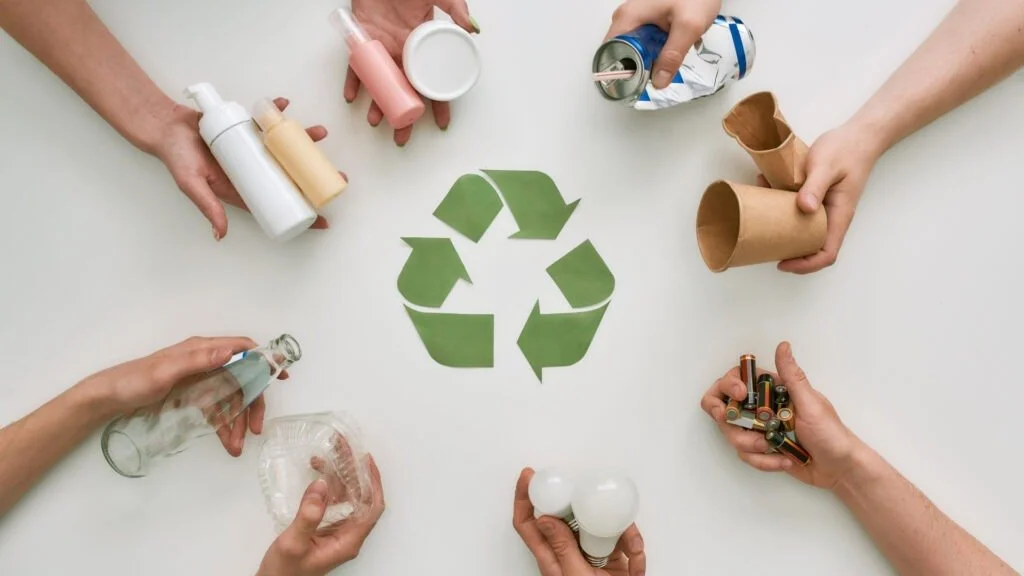
Image from Squarespace
Eco-fy your hobbies
I think a big zero-waste myth is that you have to give up everything you love and that it’s boring to live sustainably. No! You just simply have to eco-fy your hobbies and the things that bring you joy. Here are a few examples:
If you’re a fan of going out to get coffee at local coffee shops, simply bring a reusable cup with you and try plant-based milks to make it more sustainable
If you’re an artist, try thrifting your materials, using what you have before buying new, and getting creative by incorporating upcycled materials in your art
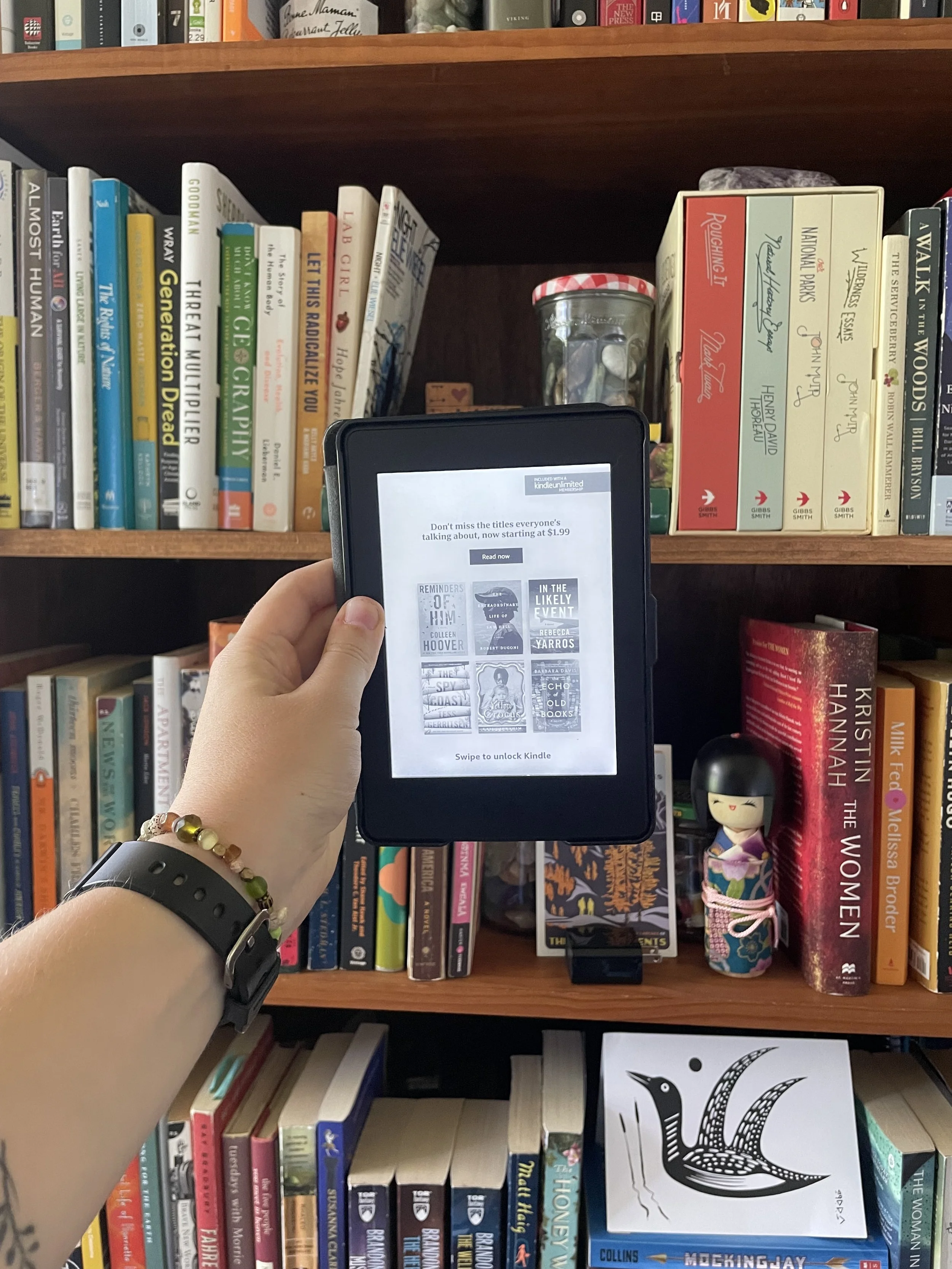
Readers: Try shopping secondhand for your books or opting for digital books outside of Amazon (why you should boycott). Use Libro.FM to buy and own your digital books, or try borrowing digital and physical books from your library
If you’re a gardener, plant native plants, go organic, conserve water (more on this in a moment), and use upcycled materials to plant stuff in
You get the idea. You can make any hobby zero-waste simply by using what you have, upcycling, shopping secondhand, and donating old materials. You can still have a fun-filled eco life! I encourage you to do this sooner rather than later in your eco journey! More on sustainable hobbies here.
Conserve energy
Truly, one of the easiest ways to live zero waste is to conserve energy. It just becomes second nature after you build the muscle memory, and it can also save you quite a bit of money! For me, this looks like opening the blinds and using natural light during the day, unplugging devices that are not in use, turning off lights when I leave a room, and partaking in hobbies that don’t use electricity, like painting and reading, just to name a few.
But, there are so many more ways to conserve energy, such as driving less (more on this in a moment), air drying your laundry (can be done by beginners, for sure!), and things like that. Check out my full list of tips here.
Conserve water
In the same vein, conserve water, too! In fact, it takes energy to pump water throughout our homes, so conserving water also conserves energy. This will also save you money over the long run. But, isn’t water a renewable resource? Why conserve it then?
Yes, water is renewable. But when you take water out of your environment, it enters the water cycle, and it rains down somewhere else. Everyone should conserve water to keep it in their local environment, but this makes it ultra-important for those living in drought-stricken areas.
Save money, save resources, and conserve water with more tips here.
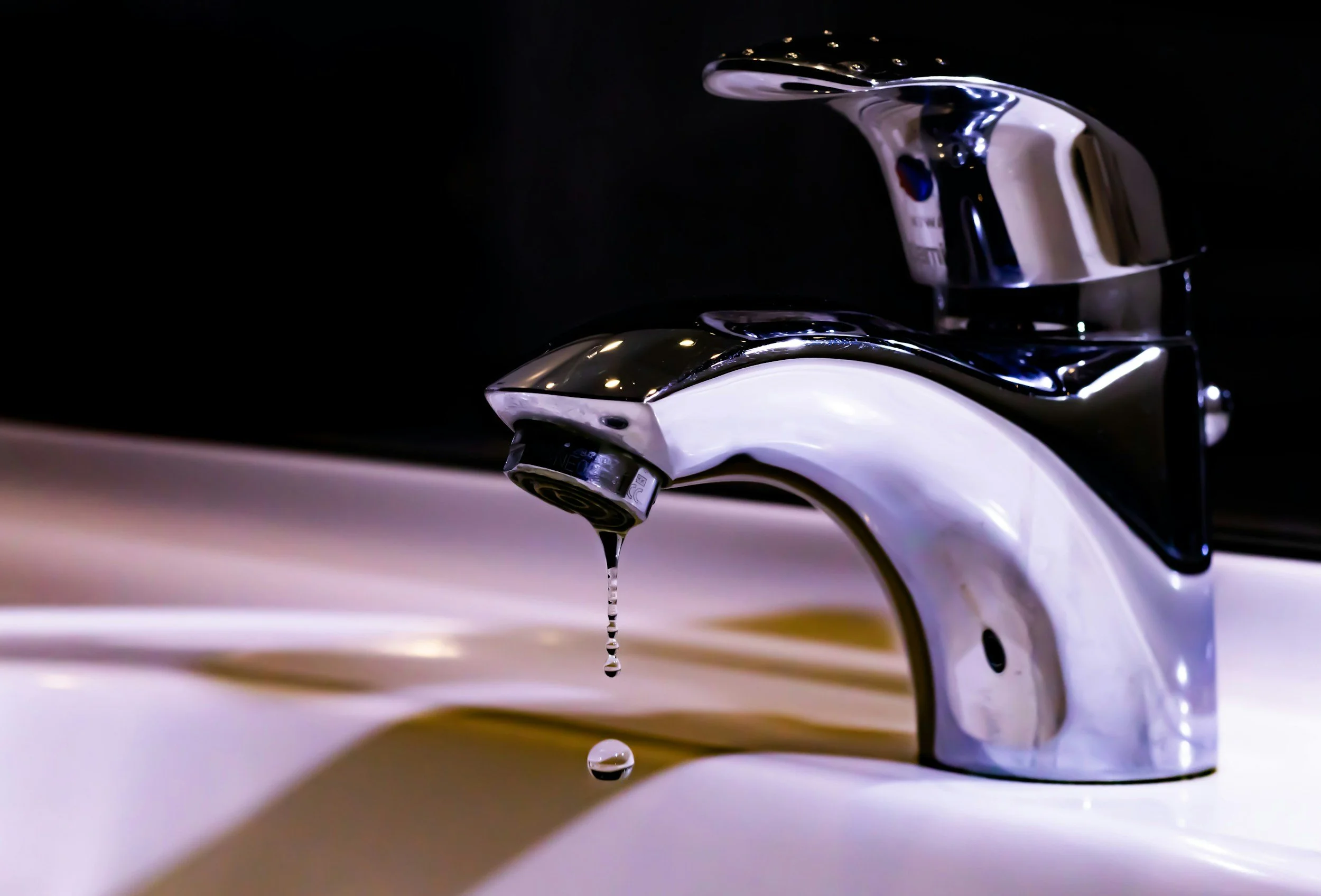
Image from Squarespace
Go car-lite
Just like with the vegan-ish category above, I’m not demanding everyone sell their car and never drive again. I’m just asking you to use it less. I rarely use our car these days, but it’s the first time I’ve ever lived in a walkable community, and I’ve moved 8 times in my adult life. Even then, I still need my car on occasion.
Simply put, if you can, try walking or biking more. If you live more rurally or have long city drives, try carpooling or taking public transportation. If you can, try taking online classes, working from home, and making virtual medical appointments to reduce driving.
Using your car less means you use less fuel, which saves you money and reduces emissions being burned from your car. This also means you have to maintain your car less and replace expensive parts more infrequently. Check out more ways to boycott big oil without giving up your car here.

Inspire others!
Yes, even as a beginner, you have influence! In fact, it can be more fun to go zero waste when you have a friend doing it with you and the ability to hold one another accountable and inspire each other in return. Don’t discount your influence. Lead by example and talk about these topics. I’ve found the best way to inspire others is to influence them to go zero waste for selfish reasons, such as saving money. You may make them an accidental environmentalist by showing them how to pinch pennies!
I’m sure you’ve heard the famous eco quote: we don’t need just a handful of people living zero waste perfectly, we need everyone to live sustainably imperfectly. You don’t have to master this lifestyle (spoiler alert: you’ll always be learning!) to encourage others to join in. Check out more tips for influencing those around you here.
Take action outside of individual actions
Okay, you’ve gotten the hang of zero waste in your home. You’ve bought the swaps and made these small but meaningful habit changes in your home. Now what? Take bigger actions and take actions outside of the home! Go to protests, go to a town hall meeting and advocate for city-wide composting, attend a teach-in about mending, go to a repair cafe and exchange skills with your neighbors, and so forth. Get involved in your community. Building community is a great way to get inspired and inspire others, and is how we make bigger changes. If you’re upset about your state’s recycling rules, be the change! Rally with others who are upset about it and make a difference!
This is scary, don’t get me wrong. It’s intimidating to put yourself out there, but it’s possible, even for beginners. I wish I had done this earlier. Here are more tips for building community.
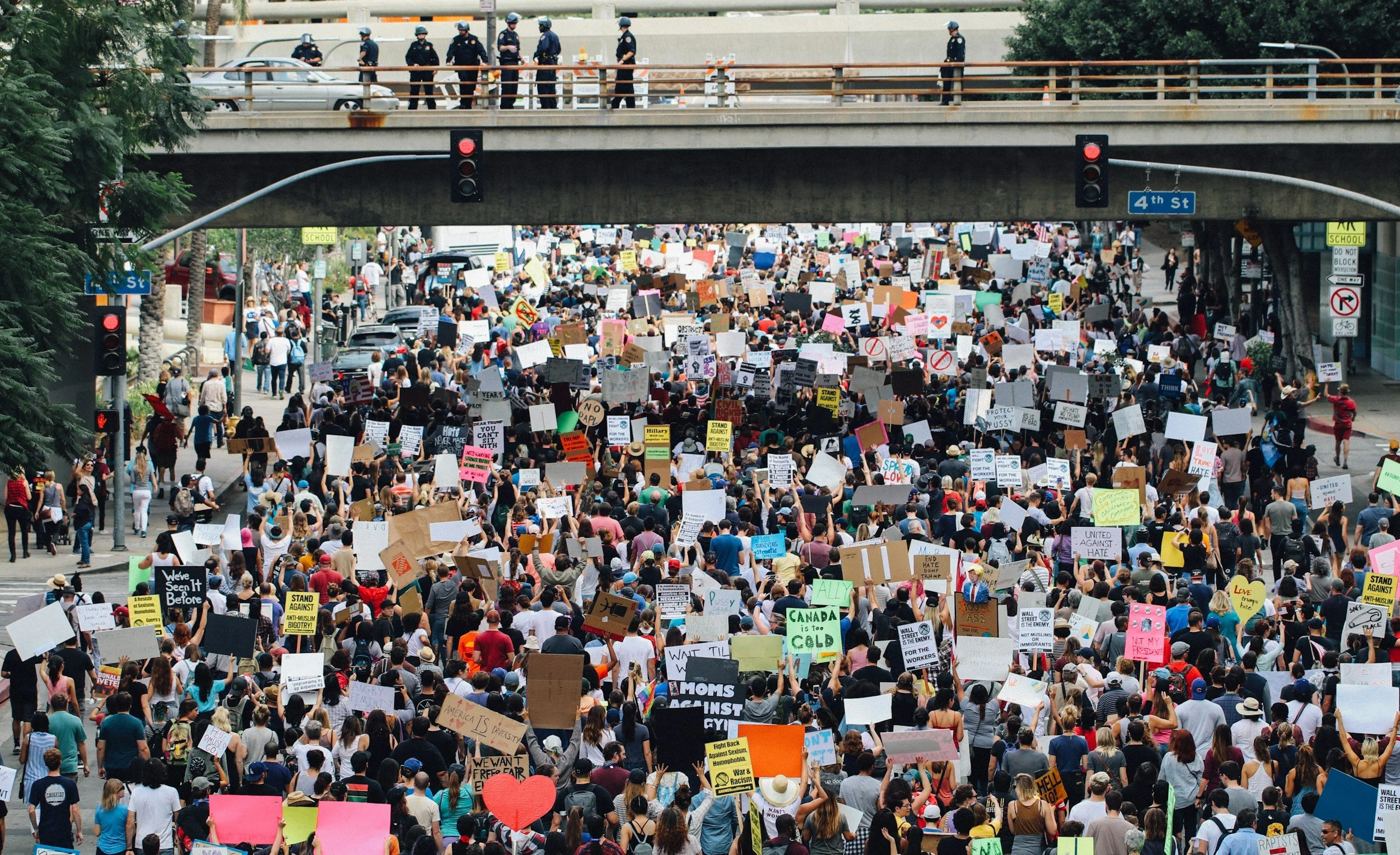
Image from Squarespace
This list is not conclusive, so please leave your ideas down below for what you think are the best low-waste habits for beginners…or for any skill level! If you’re more intermediate or advanced, you may wanna check out this video.
Thanks for checking this out and starting your eco journey. If you’re still stuck on where to start, I highly recommend you check out my Zero Waste in a Year Guide. This guide walks you through daily eco tips for a full 360 days. You can start it January first, sure, but it’s designed to be started any day of the year and complete it as you see fit. We cover one new topic every month, and most of the tips and swaps are free habit changes, so you will do nothing but save money on your low-waste journey.
If you’re still not sure if the Zero Waste in a Year Guide is right for you, watch this video first for more details. Otherwise, you can buy it here with code RESOLUTION10 for 10% off this New Year. Enjoy!
Thank you for supporting me. I’ll catch you in the next one, until then, remember that your small actions make a big difference in the long run :)
Emma
