
STOP Recycling These Things! They’re Not Recyclable
STOP recycling these things! It leads to wishcycling (learn more in full here), which is putting stuff in your recycling bin in the hopes that it will be recycled, but it actually won’t. It can lead to your entire bin being landfilled instead of recycled, and all your good work may go to waste.
I don’t say this to scare or worry anyone, but rather, I say this because we always have a chance to learn something new. Today, let’s learn just a bit about proper recycling rules. Check out the full recycling playlist here!
Disclaimer: rules are always different
Everywhere you live is going to have different recycling rules. I’ve lived in 6 US states, and they’ve all varied slightly. I’ll say it once, and I’ll say it a million times: always check YOUR LOCAL rules for recycling. What we’re going to talk about today are generic things that, truly, I have never seen recycled curbside. But, it never hurts to check! Especially things like glass and cartonboard. These are not always accepted curbside.
Check your bin. It may have a sticker on top with things you can and can’t put in the bin. If you don’t see one, call or email your local recycling facility for some help.
Disclaimer 2: You can technically recycle all of these things
So why make a list if everything on this list is recyclable? Well, these things aren’t recycled curbside. Curbside recycling is the blue (or maybe another color) bin that you add your recyclables to, and a truck comes to pick it up. You may also hear the term “single stream recycling.”
This is very general recycling. Hence why you can’t put a lot in there. This will most often be:
Plastics #1 & #2
Glass
Metal cans
Paper, paperboard, and cardboard
Sometimes cartons
But everything else has to stay out of the bins. Though that doesn’t mean they’re not recyclable, just not recyclable curbside. That means you have to seek out special programs to recycle the items on this list. It’s annoying and no, it’s not necessary to live a zero waste life or be an environmentalist. But it can be heartbreaking to throw things away. If you have the desire to seek out special programs, we will talk about a few as we go along!
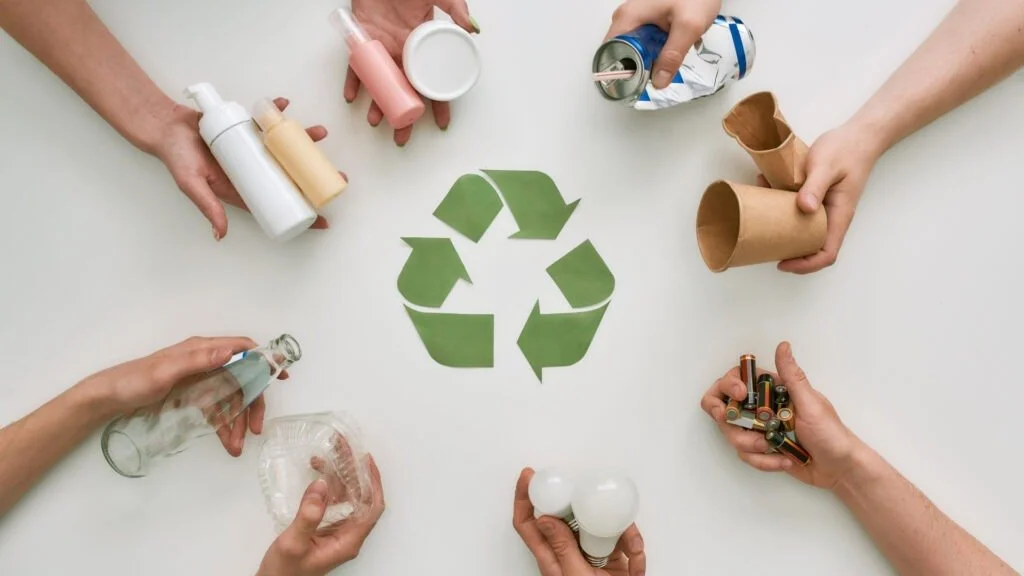
Things you CANNOT recycle
Batteries and Tech
Landfilling tech is extremely harmful. When it “breaks down” (it never does 100%), it leeches heavy metals and other toxins into our soil and water. Not to mention, these things are highly valuable. Metal and tech are the most advantageous items to recycle, and you can even get a pretty penny yourself for recycling tech, even broken tech! Unfortunately, you cannot recycle tech or batteries curbside, so please don’t add them to your bin. Instead, you do have to seek our tech recyclers. Some common places are Batteries & Bulbs or tech stores like Best Buy and Staples. But you may even be able to find smaller tech recycling facilities with a simple Google (or Ecosia) search.
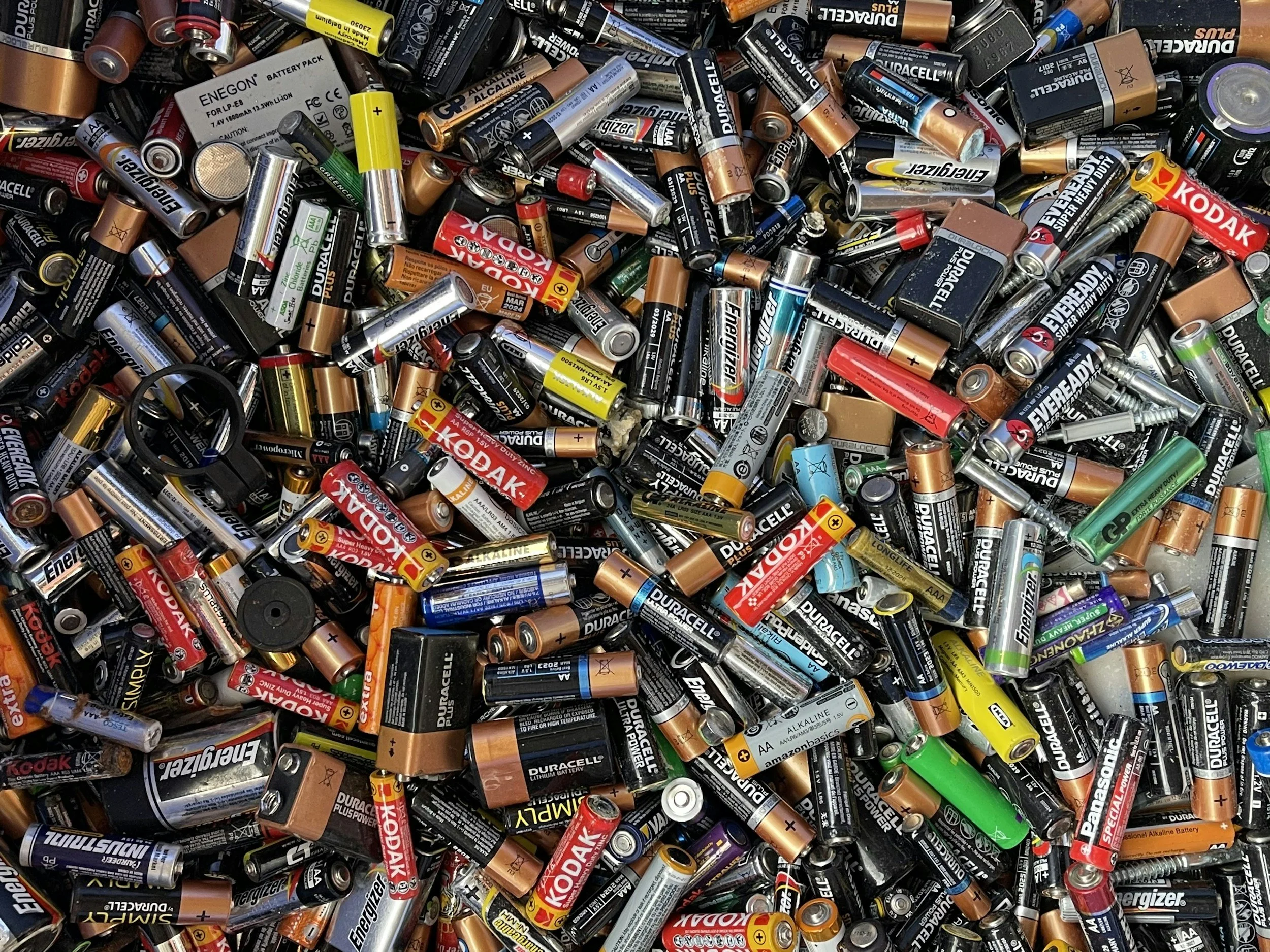
Image from Squarespace
Clothing
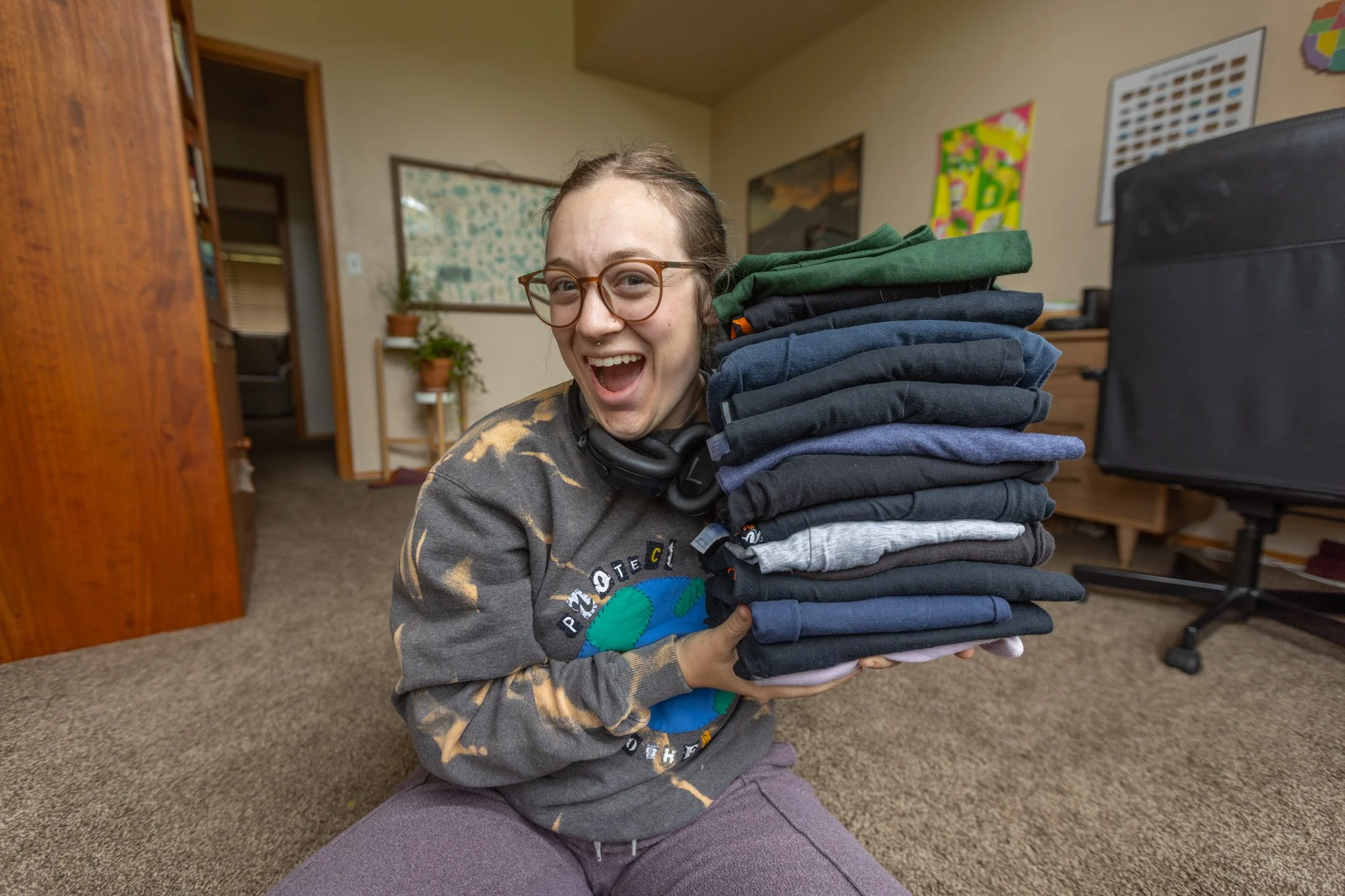
To be honest, we should be doing everything in our power not to recycle clothing. Yes, even though special programs. First, clothing recycling is very difficult, and it’s more often downcycled, anyway. Second, it’s so easy to do other things with it!
If the piece of clothing is still in good condition, you just don’t like it or wear it anymore, this is not a justification for recycling it. Please donate or sell it instead!
If the piece of clothing is a little ratty, try mending it. Patch that hole, add a button back on, or spruce it up by dyeing it!
If the piece of clothing is too far gone to be mended or donated, try recycling it at home. You can use old textiles for so many things: make homemade tissues, turn it into yarn to make a handmade rug or bag, use them for reusable cleaning rags, save them for stuffing, and so much more.
Only when you exhaust these other options should you seek out clothing recycling. To be honest, I don’t even have a recommended place for clothing recycling. They are often expensive or greenwashing or both. If you have good recs, let us know!
Thin Plastics
From snack bags to Red Solo Cups to bread bags and beyond. Thin plastics are actually very easy to recycle, but are way too expensive to do so. Especially things like bulky Styrofoam. It costs more in fuel to transport these large objects than it does to turn them into something new.
Thankfully, recycling options for thin plastics are becoming more common, but this is still something you usually have to seek out for yourself. Do not place these items in your curbside bin unless your rules explicitly state that you can! Most grocery stores, though, offer thin-plastic recycling bins at the entrances. See if your local store has one!
Better yet, since this is still quite flawed, try reusing that plastic before recycling to give it new life. Reuse bread bags as pet waste bags. That bag from your frozen berries was designed for the freezer, repurpose it as such! You can use it to protect fragile items in storage or that you’re shipping, and more.
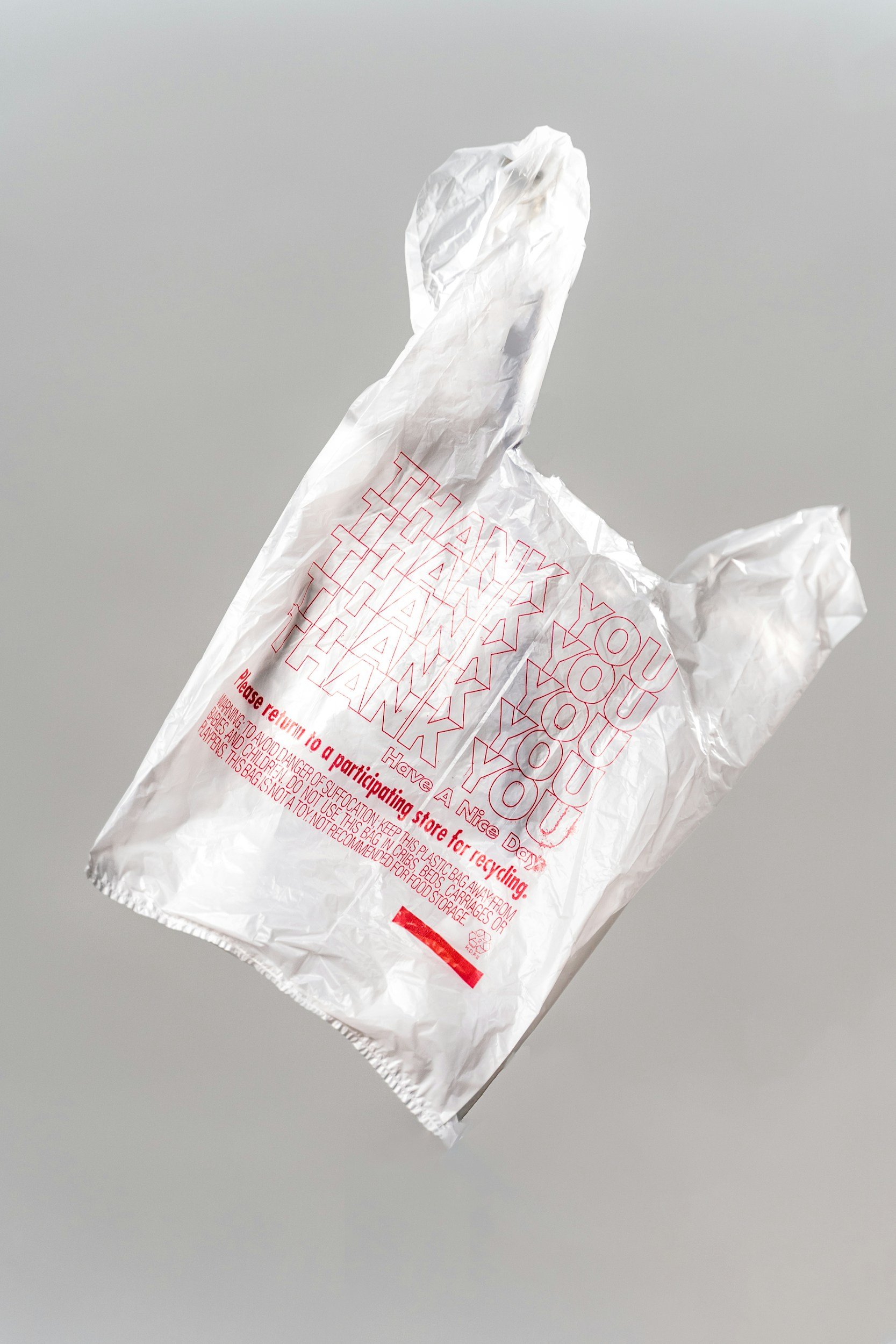
Image from Squarespace
Bioplastics
As bioplastics become more common, they are actually starting to be more and more recyclable in general and also curbside! Check out this full video about bioplastics to learn more. I’ve said it once, and I’ll say it a billion times: always check your local rules. Maybe your region used to NOT accept bioplastics, but they do not! Maybe you’ve been placing them in your bin, but they don’t actually recycle them. Always double-check!
That means that your bioplastics do have to go into the landfill if your recycling facility does not recycle them. It can be difficult to find special programs to recycle them. Does that mean we should stop buying them? No, I don’t think so. They often replace thin plastics, which we just talked about, they are not recyclable very often, either. But they are less polluting to create and do not break down into microplastics. There are many benefits to using bioplastics, even if they end up in the landfill, which you can learn more about here.

Dirty Items
The worst thing you can put in your recycling bin is food waste and dirty items. Used napkins, diapers, half-empty pasta sauce jars, and the like all have one thing in common: contamination. Half of these things I listed are just trash and should never EVER go in the recycling bin. But things like the pasta jar or a crusty peanut butter container CAN be recycled…when cleaned!
Use my favorite lazy zero-waste method: the dishwasher! The dishwasher is a great way to clean these items that NEED to be clean in order to be recycled. No, they don’t have to be sparkling, but you should remove as much filth as you can. Why?
When you add a yogurt container with yogurt to your recycling bin, that yogurt will get all over your cardboard and clean glass, and clean plastic. Now, it’s all dirty. Now, none of it may be recycled. This can cause your entire bag, bin, or even a whole batch of recycling to be ruined. Better safe than sorry, give it a quick rinse!
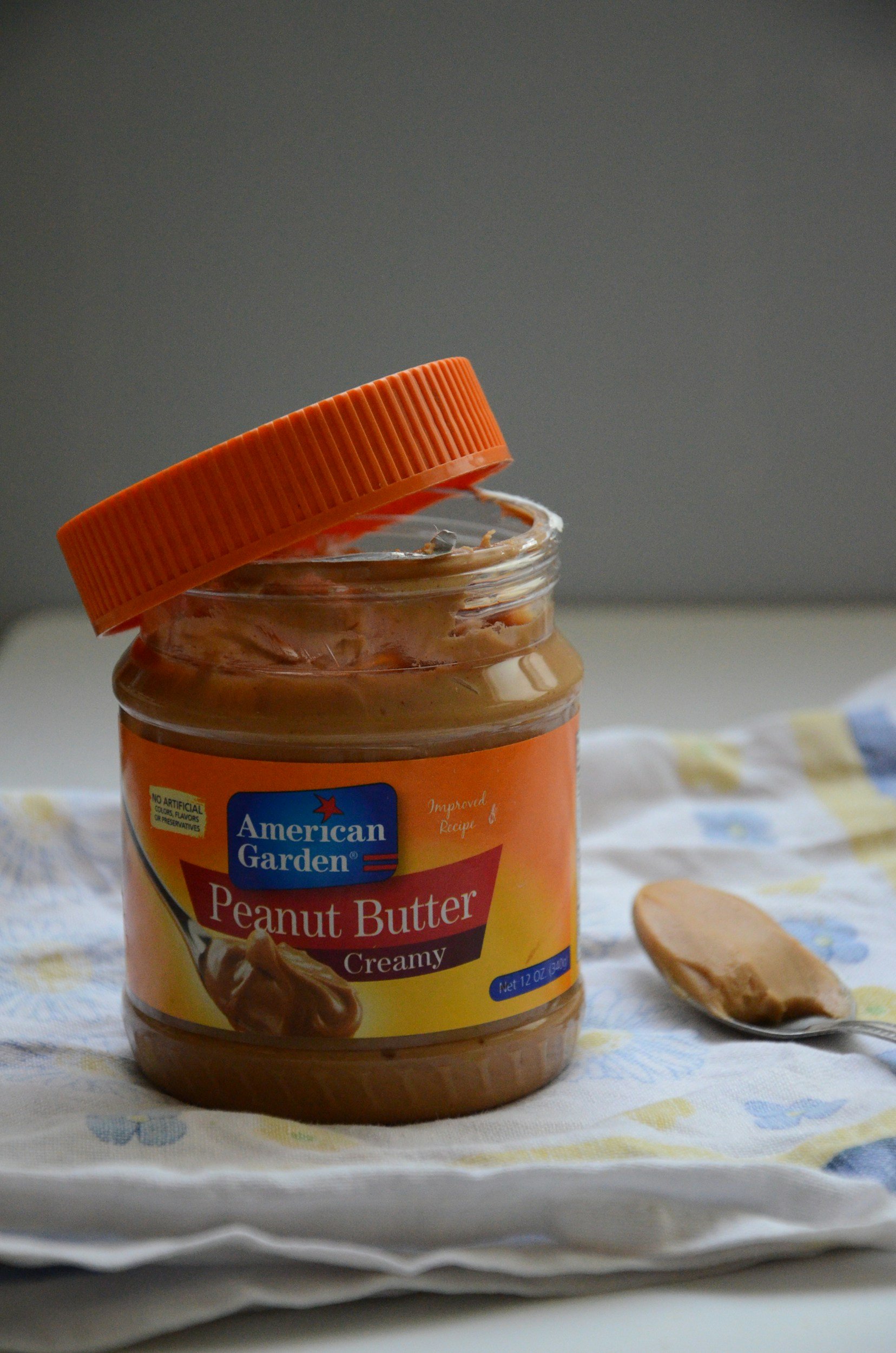
Image from Squarespace
Food Waste & Yard Waste
In the same vein, any organic material will just contaminate the recycling system. Anything that should be composted should go in the compost bin, your backyard compost, or, in the worst-case scenario, the landfill. Sticks, leaves, apple cores, banana peels, and things of that nature are not recyclable. Well, not in the sense that a plastic bottle is recyclable.
Technically, compost IS a form of recycling and a circular economy in and of itself. But compostable does not mean you can put that item in your recycling bin. Instead, pick one of these ways to compost to reduce emissions and recycle correctly.
Small Items
Technically, small items CAN be recycled. Things like staples, scraps of foil, and shredded paper, to name a few. They are fully metal or paper. So why can’t they go in your bin? They’re often too small for machine-sorting to detect and may even clog and damage machines. The common rule of thumb here is to ensure that whatever you put in your recycling bin is the size of a credit card or your first or bigger. Smaller items should either be landfilled or contained in a material of the same makeup. What I mean is, staples could be collected in a metal can with a metal lid, and shredded paper could be contained in a paper bag. Of course, check your local rules; they may not accept those sorts of items!
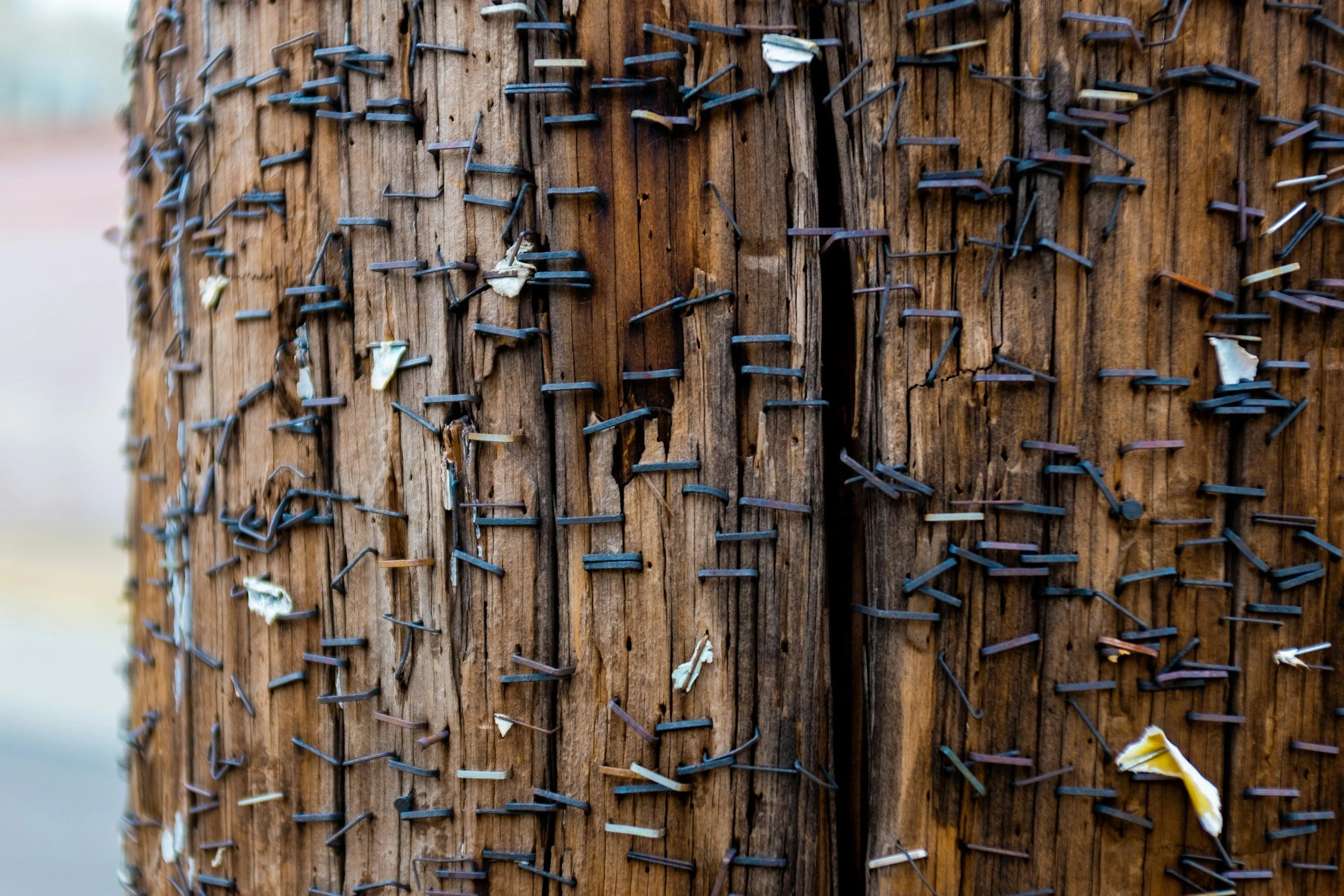
Image from Squarespace
Medical Waste
I get it, plastic is frustrating, but boy am I thankful for a sanitary medical facility! That means a lot of single-use items, though. From bandages to single-use needles to gloves and most medication packaging, these things can’t be recycled for safety reasons (needles), to hygiene (bodily fluids), or being thin plastic.
When it comes to medical waste in your own home, though, you can do a few things:
You can eco-brick thin plastic, such as bandage packaging (no used bandages in your eco-brick, though)
You can seek out medication container recycling programs. Blister packs and pill bottles are hard to recycle, but not impossible. See if your local pharmacy has an option for finding a mail-in service to take care of these items
Just don’t place this stuff in a curbside bin!
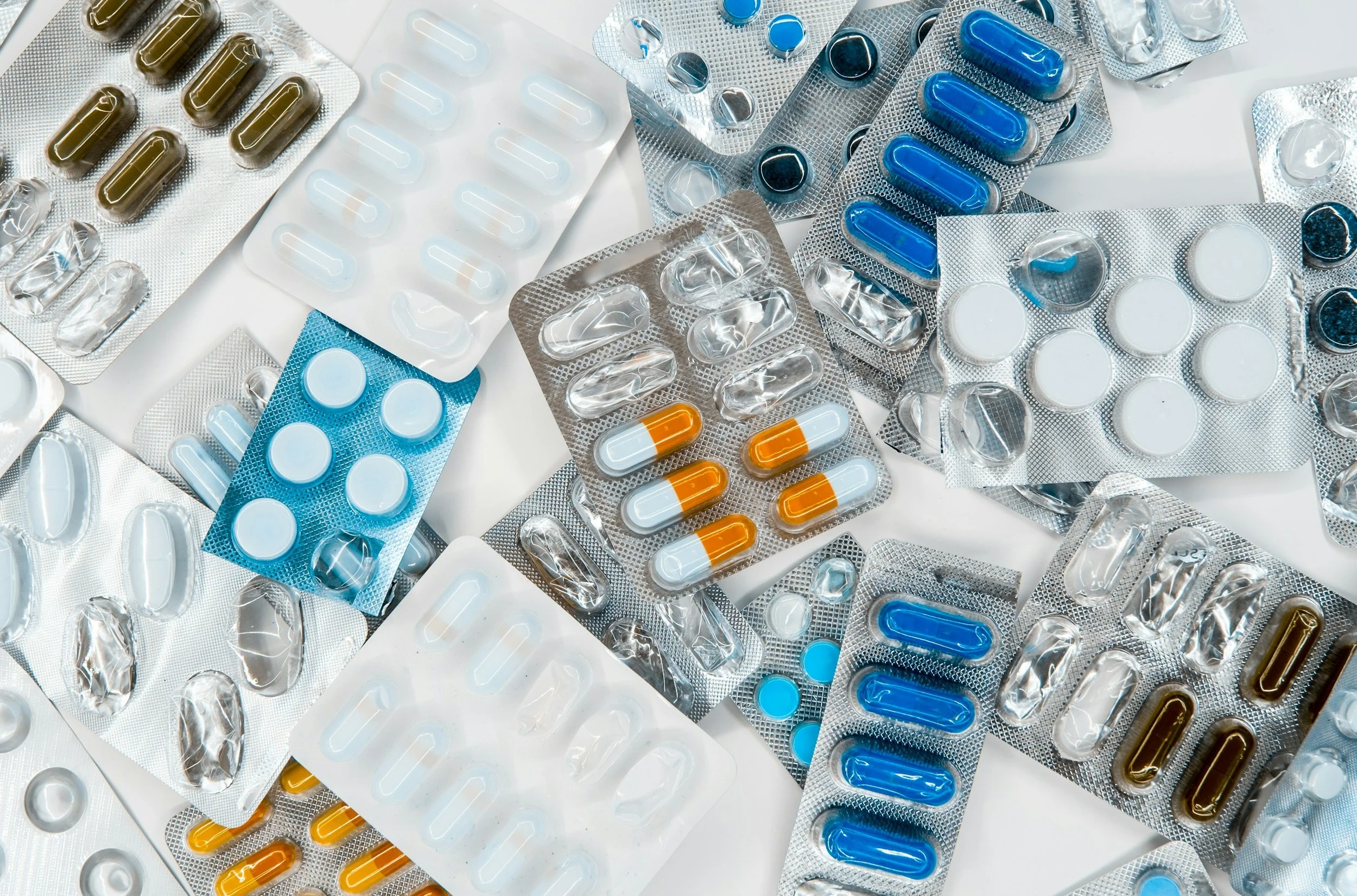
Image from Squarespace
Coffee Cups, Ice Cream Tubs, and Other Cartons
Cartonboard is often marketed as recyclable, but more often than not, it can’t be recycled. Of course, check your local rules! I’ve moved 8 times in my adult life, and only 2 of those places accepted cartons for recycling. This material is so difficult to recycle because it’s not just paper: it’s plastic, metal, AND paper combined. There are some perks, sure, such as that it’s less plastic than other packaging options, it’s not breakable, and it’s lightweight. I see why companies choose it! But it’s just a shame that it’s so rarely recyclable, and companies push this as a sustainable material. Learn more about cartons in this video.
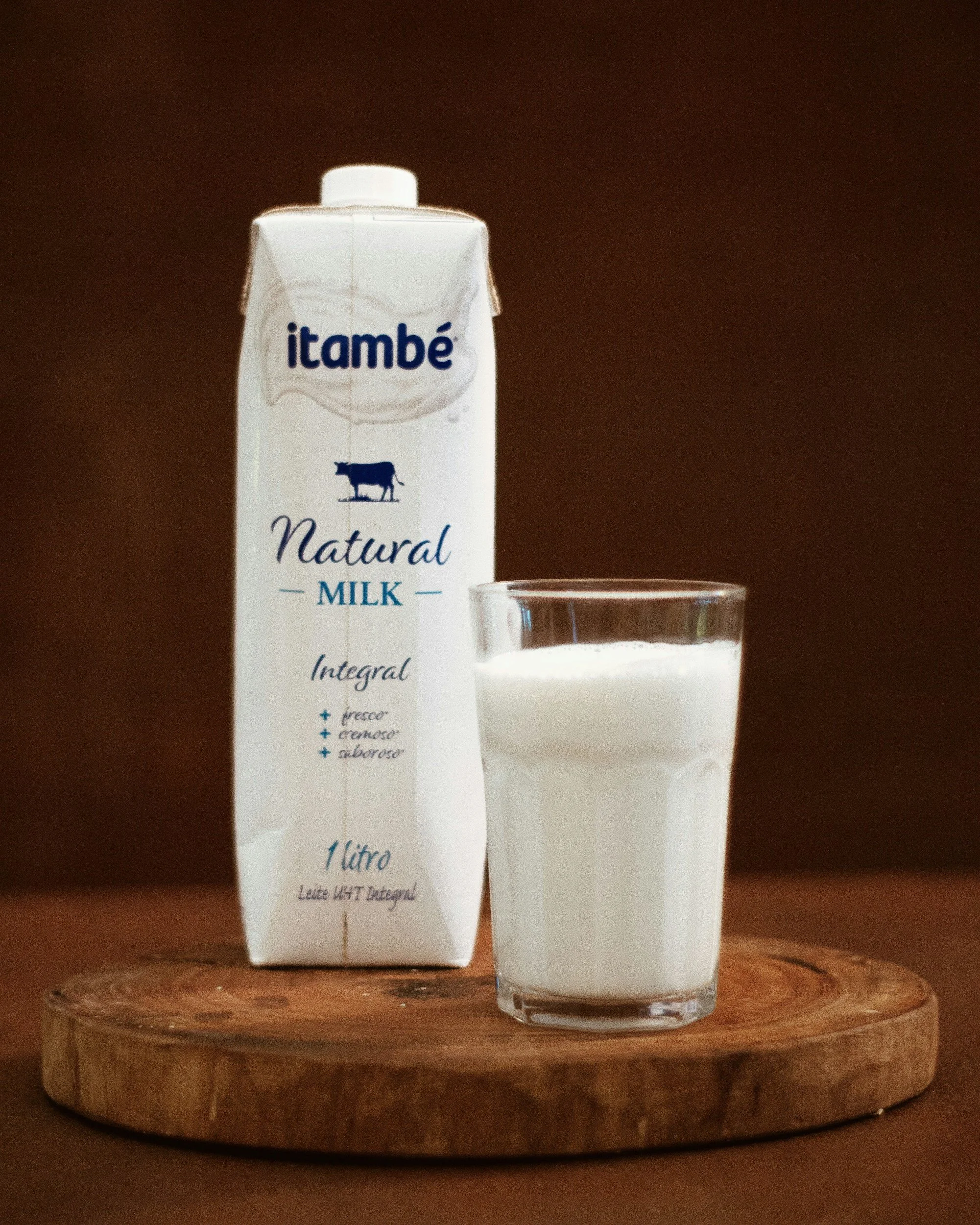
Image from Squarespace
Receipts
Speaking of hidden plastic, receipt paper is very likely NOT just paper. It’s usually paper covered in plastic. That’s because receipts are not printed with ink. They are usually thermal printed with heat. Heat would burn 100% paper. So while this plastic protects the paper, it renders receipts nonrecyclable and potentially even hazardous due to the type of plastic. Landfill instead of recycling them!
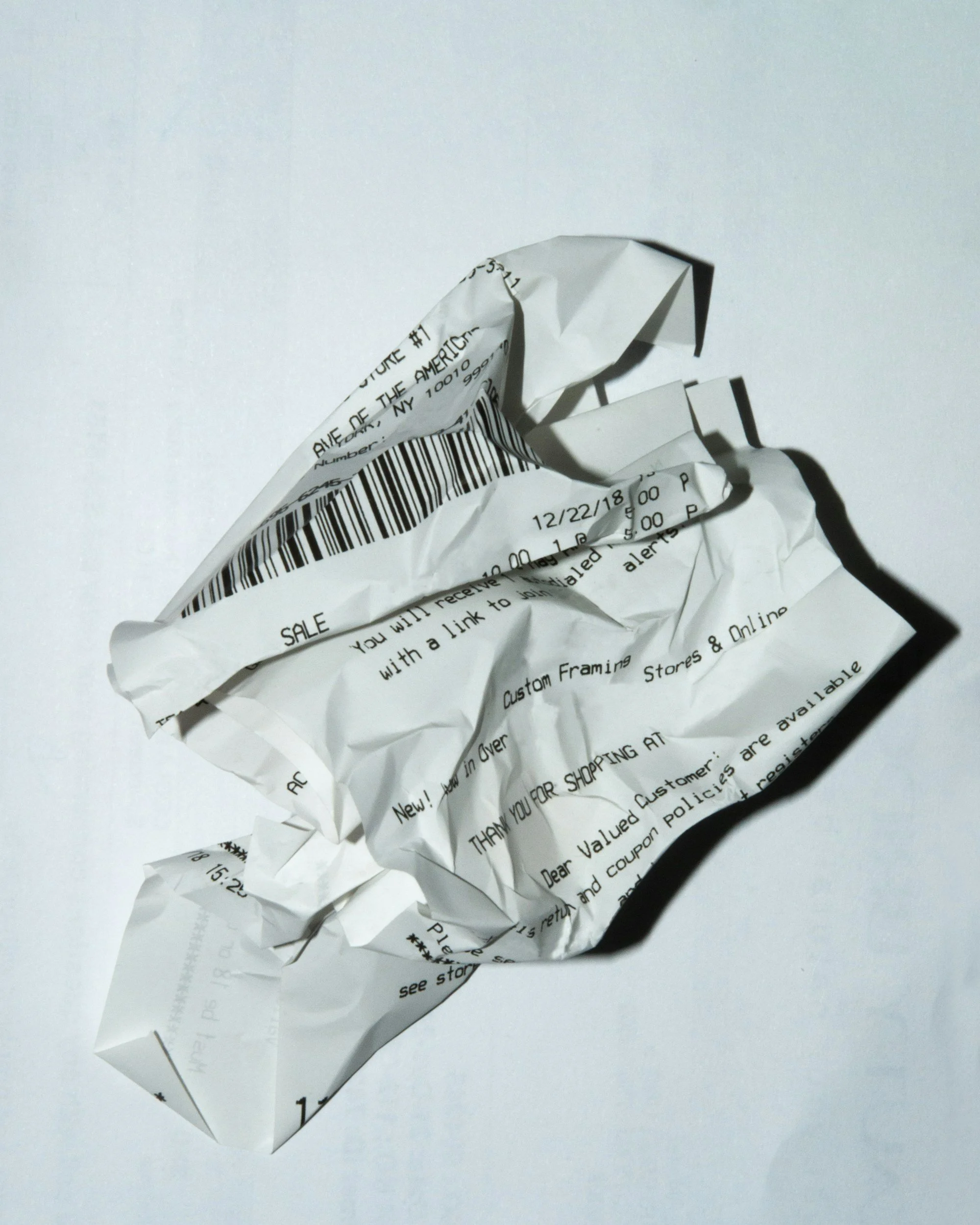
Image from Squarespace
Most Toys
Children’s toys, pet toys? None of them can usually be recycled. This most often comes down to them being made of several materials, being mixed materials. That makes them really difficult to separate and properly recycle. If the toy is still in decent condition, donate it or sell it, or save it for hand-me-downs. Just like with clothing, there is almost always another option besides the landfill or recycling toys.
But if the toy is 100% unusable, seek out special recycling programs or throw it away to prevent wishcycling.
Single-Use Plates and Cutlery
Paper plates, plastic plates, bioplastic cups, you name it: none of it can usually be recycled. And no, it’s not because of the material it’s made of, it’s due to food waste contamination as we talked about above. Even a 100% paper plate should not be recycled if it contains too much food waste. You may be able to contact your local recycling facility and ask about a certain percentage of food waste allowed. If the paper plate is only slightly soiled, they may accept it, but please ask first!
But some of these disposable cutlery options are also in the “thin plastic” category, making them too expensive to recycle, so they are simply not accepted.
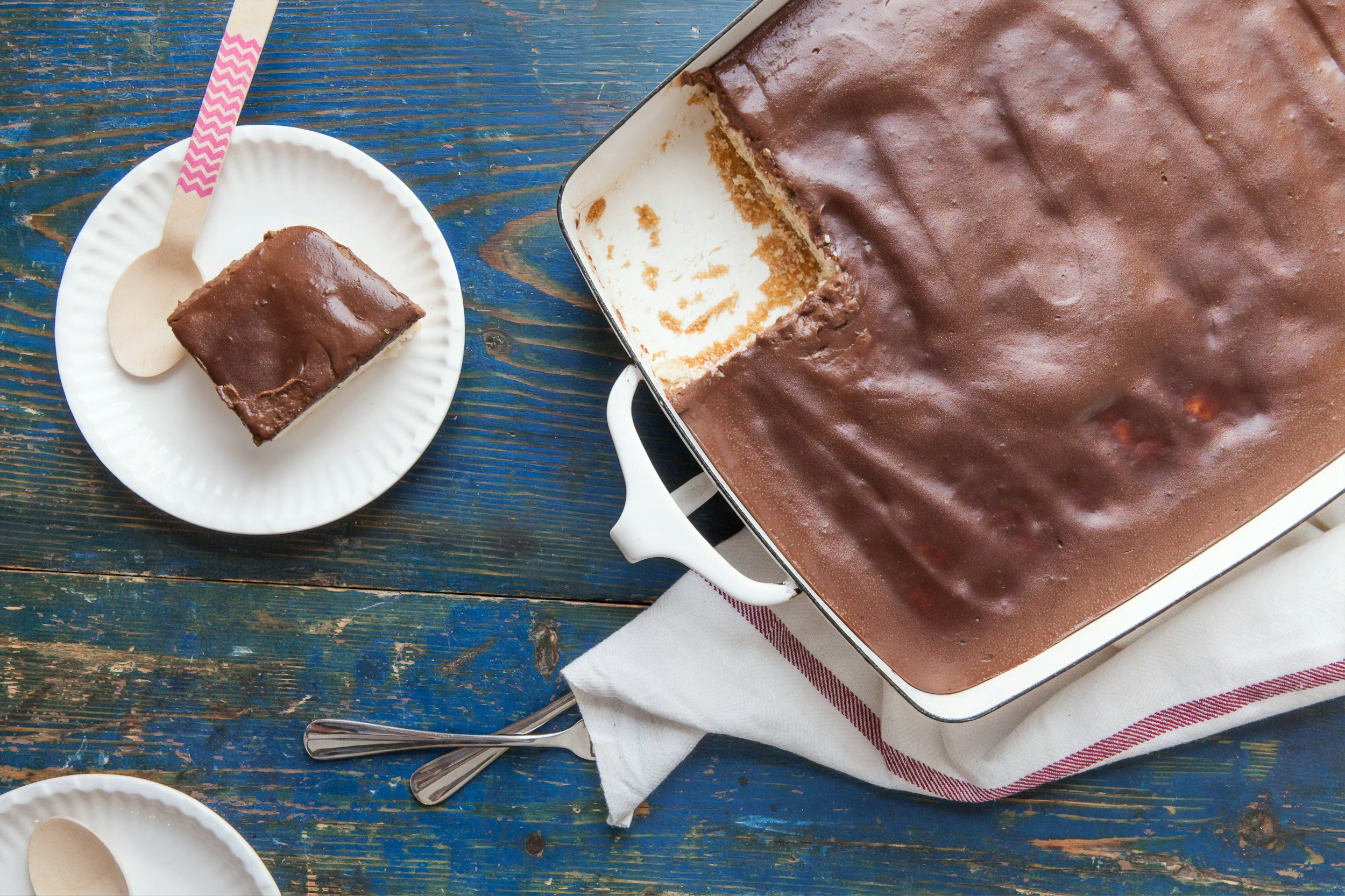
Image from Squarespace
Paper Towels and Tissues
Again, in theory, these paper products are recyclable, but due to them being contaminated with snot or cleaning solutions, they cannot be recycled. Good news, though, most of them can be composted! Be sure you’re not composting harmful cleaning products, though. Stick to composting things like cotton swabs you use to clean your ears, tissues for blowing your nose, or paper towels used to clean up pet messes. You can compost these things commercially or in your backyard compost. Learn more about composting here.
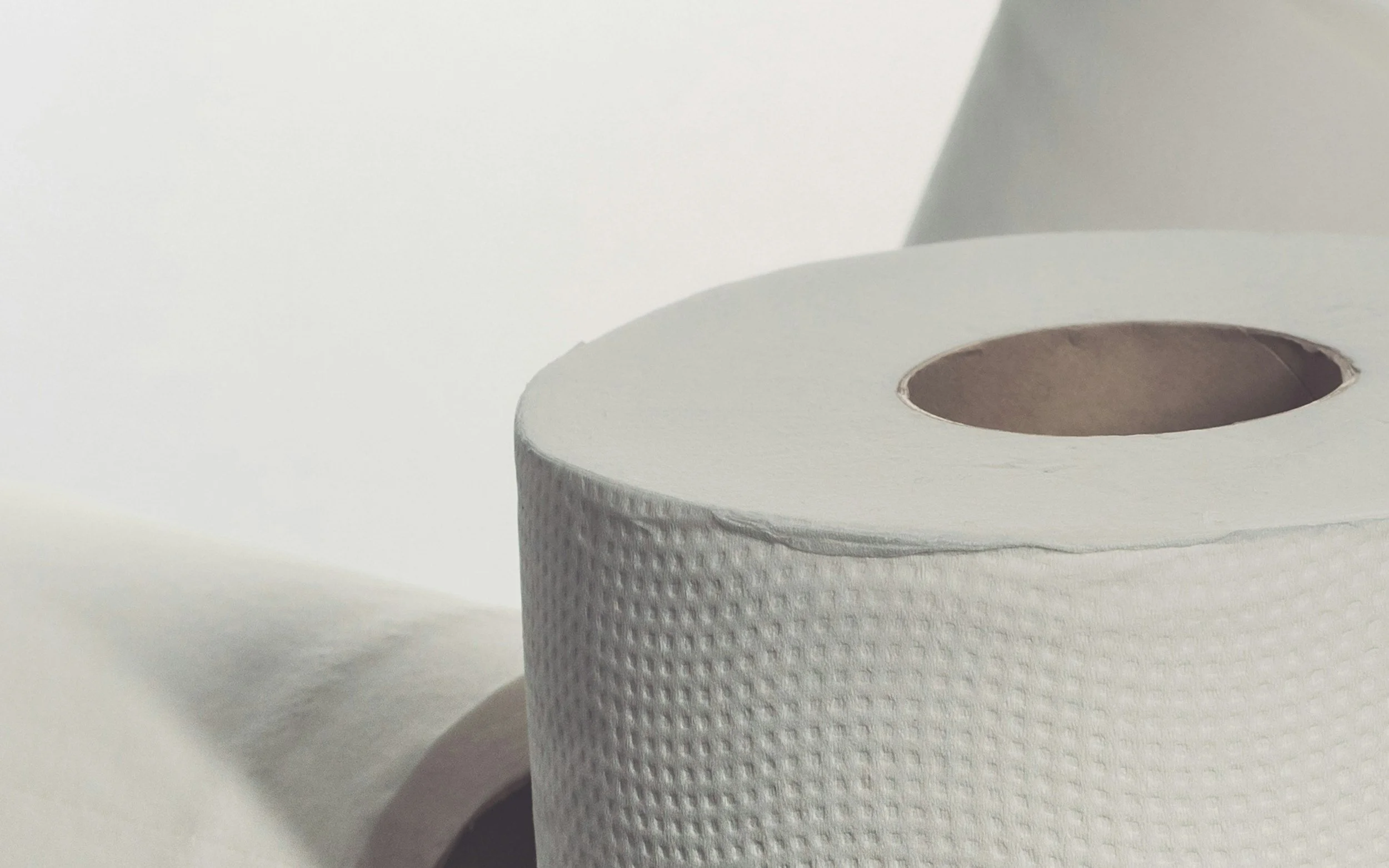
Image from Squarespace
Chemicals and Hazardous Waste
While these things may be recyclable through VERY special programs, never put chemicals in your curbside compost. They can harm recycling workers without proper protective equipment and are likely to spill into the environment. Yes, you should seek out ways to recycle these, so these toxins don’t end up in our landfills. So please find special programs to recycle things like motor oil, bleach, paints, and things of that nature.
If you have empty chemical cans and containers, it’s best to ask your local recycling facility for instructions. But these are more likely to be taken curbside than filled containers.
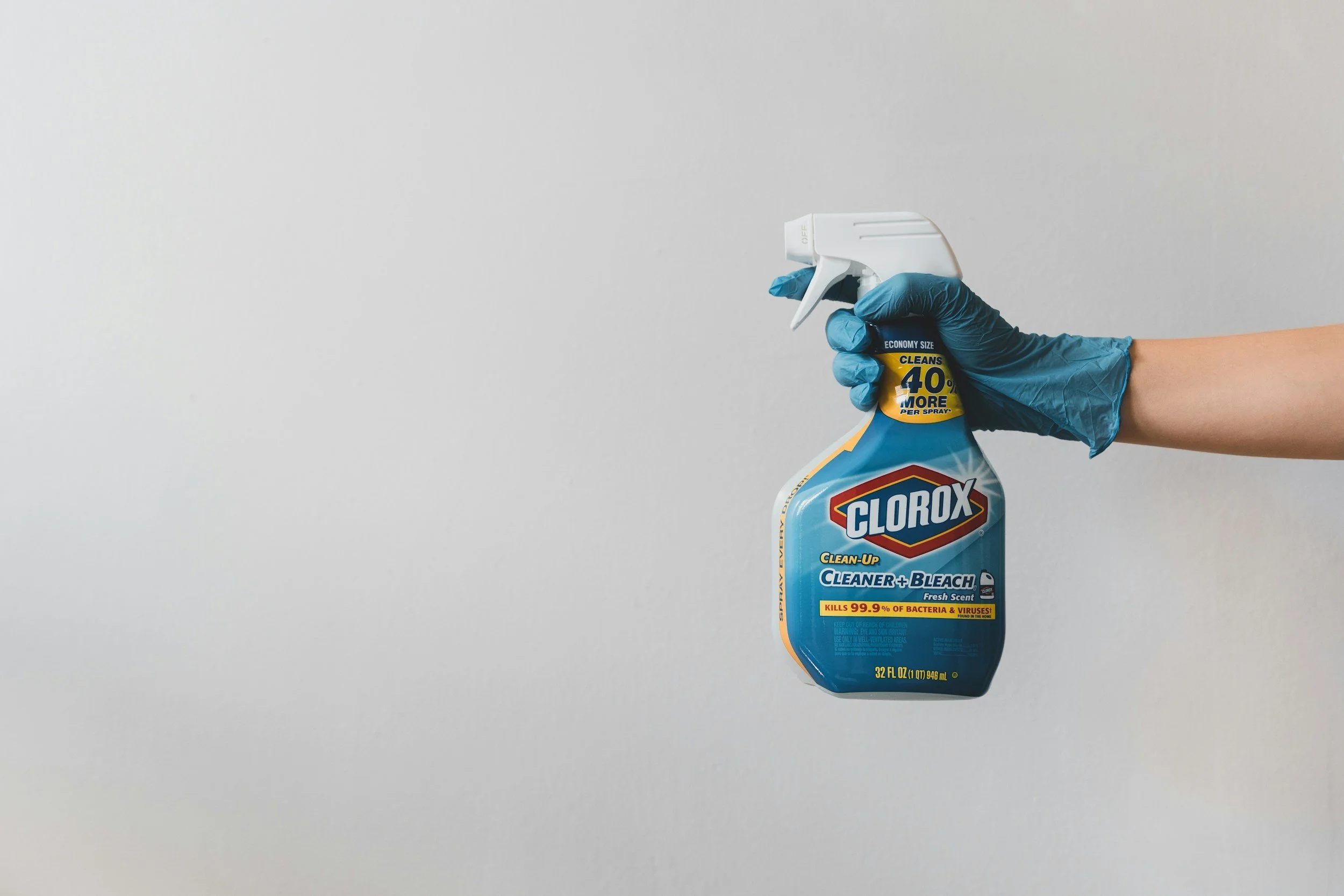
Image from Squarespace
Bagged Recyclables
Most often in the US, your recycling should not be bagged! You’re sick of this by now, surely, but check your local rules. Though it’s better to be safe than sorry, and leave it unbagged. Now I personally still use a bag to collect my recycling in the house since that’s easiest, but I dump the bag into my recycling bin that the truck comes to take, and reuse the bag in the house.
But some countries, like Japan, require you to use a bag! This is why it’s important to check your rules and not just take my claims as a blanket statement.
Aerosol Cans
Want to prevent explosions? Don’t recycle aerosol cans! Yes, they’re mostly made of metal; therefore, technically highly recyclable (which material is the most recyclable?). But since they are pressurized, they may explode in transport or inside the recycling facility when exposed to higher temperatures and pressures from the outside.
Some regions may allow you to puncture the can and recycle it once it is depressurized, but that is risky to your own safety, then. Check before taking this risk, and know that this risk is not necessary. You may be able to find special programs for recycling.
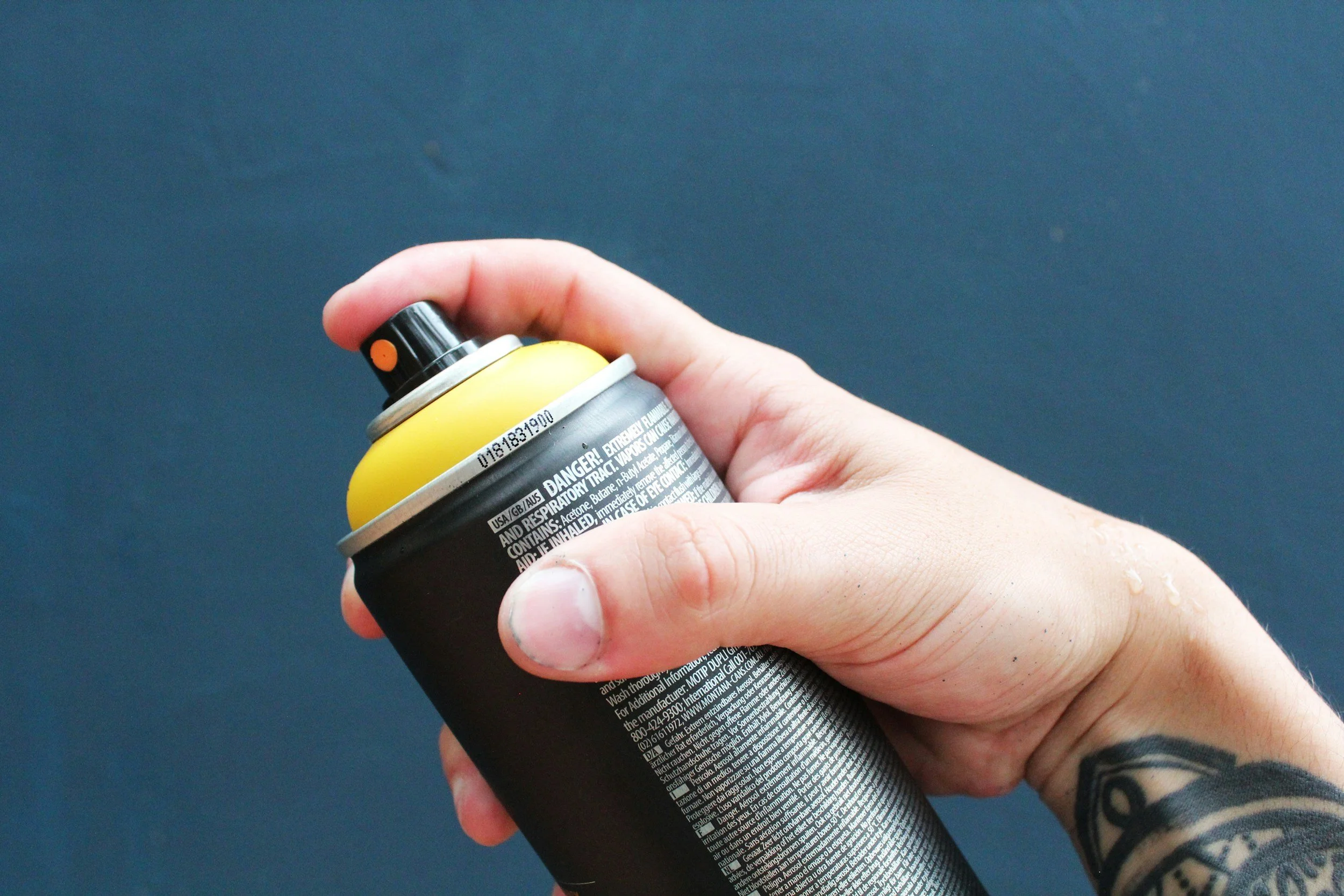
Image from Squarespace
Thank you so much for reading along and trying to be a better recycler!
It really comes down to just a few things:
Check your local rules and follow them
Don’t wishcycle!!
Reduce what you consume, since recycling is so broken
I hope this helps! Let us know which one was the most shocking below.
As always, remember that your small actions make a big difference in the long run :)
Emma
