
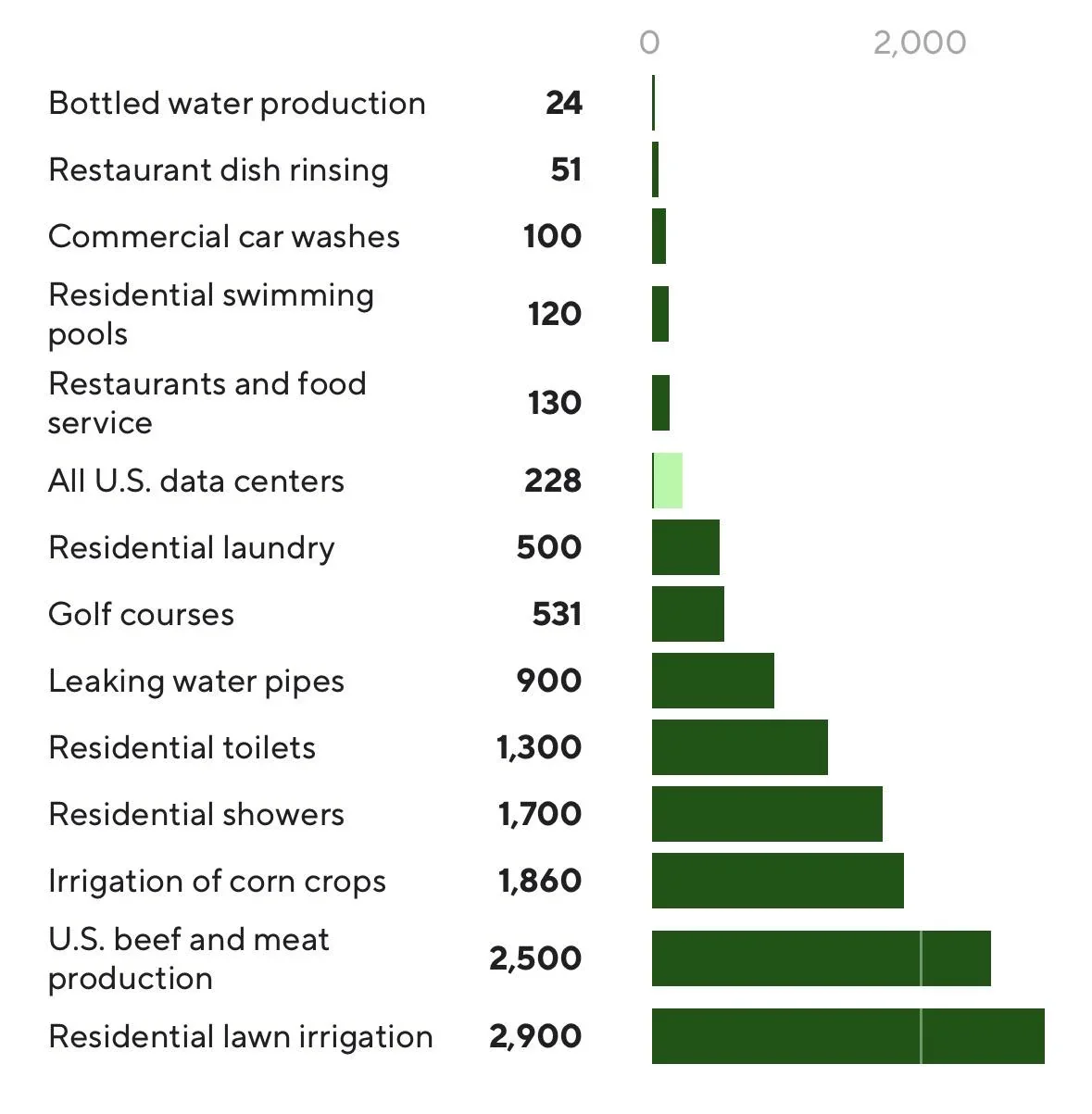
Don’t get me wrong, I’m excited to see everyday people, not just environmental activists, care about AI data centers and their impact on the planet (learn more about that impact here). But, it’s kind of funny to me. We’ve had other industries polluting water and consuming water to the same level as AI data centers for decades, if not centuries before AI!
So, here’s a list of other harmful industries that are depleting and destroying our clean water around the globe that I hope you also stand up to fight against and boycott.
Why the fight for clean water?
Well, we all need water to live! It’s how we fuel our bodies and grow our food, which also fuels our bodies. It makes the world go round. Water is life!
While it is considered renewable, that accounts for us not using more than can be replenished.
Thomas Net states that, “By 2030, water demand is expected to exceed current supply by 40%, according to the Water Resources Group, an arm of the World Bank. In addition, recent global assessments show that around 2 billion people already live in water-stressed areas, with increasing pressure on water supplies driven by population growth, climate change, and industrial water use.”
Every water conservation effort matters. Here are my tips for conserving water at home.
Agriculture
UN data states that agriculture accounts for roughly 70% of freshwater withdrawals. I get it, we need to eat. But our current agricultural systems are extremely unsustainable.
Farming in the desert
Most of the US is farmland. Check out this map that shows the amount of land used per industry. It does not depict the actual area of these farms. The Midwest mostly grows wheat, soybeans, and corn which are used mostly to feed livestock, not humans. So much land and water are used to feed us only indirectly. More on animal agriculture in a moment.
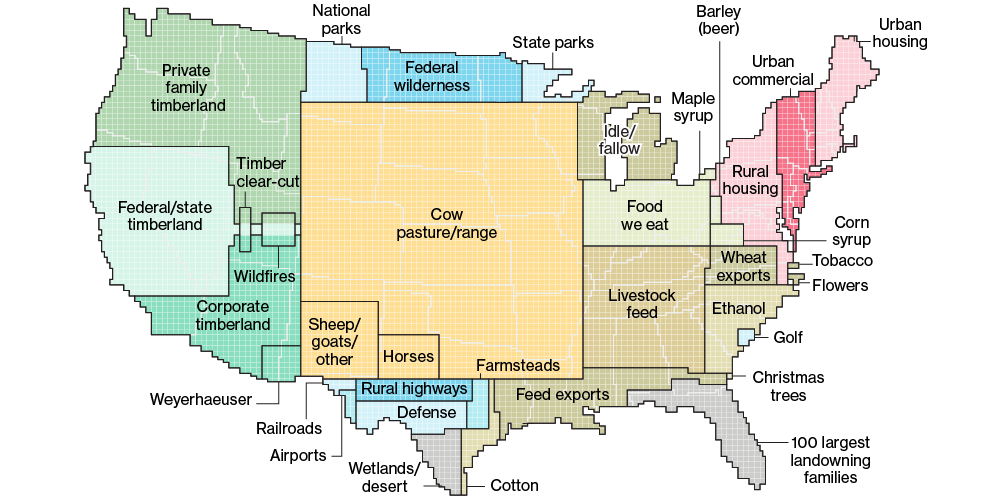
Now, most of our human food is grown in the Southeast and Southwest, where it’s warmer and more conducive to these crops. However, the Southwest US is a desert, and water is running out. It has been for quite some time. Check out my full videos about Lake Mead here, but here’s the short version:
The desert Southwest was only sparsely populated by colonizers until the start of the 20th century (give or take a few years). In the early 1900s, the largest dams were being built (like the Hoover Dam and Glen Canyon Dam, to name a few), and water rights were established for the Colorado River Basin. At the time, in 1922, the population was around 6 million people, and the total acreage of irrigated lands was around 2-3 million acres. Now, that acreage is over 5.5 million acres of land needing irrigation with far less water than was available in 1922, partially due to the fact that now 40 million people live in the basin and rely on this water.
Not only that, but the Colorado River Basin has faced a climate change-induced drought since around 1998, and the lake levels on the river are at their lowest levels ever.
See the problem yet?
How to help this area is by eating produce grown locally to you, conserving water if you live in this region, and becoming a climate activist to hopefully help this entire river basin.
Animal agriculture
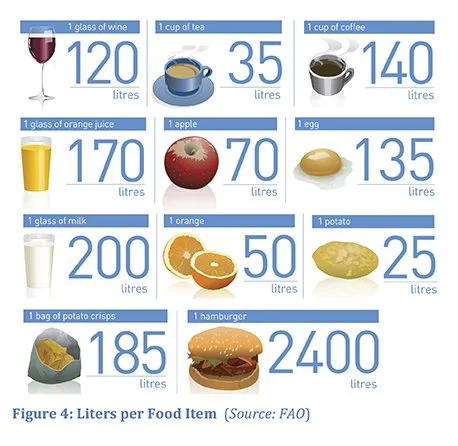
Worse still is animal agriculture. We use more of our land in the US (and many other countries around the world) to grow crops to feed animals. Cows and pigs are huge and require a lot of food to grow to the size that we need to kill them.
Go check out my full video about why eating a vegan diet is so much better for the planet, but in short:
Animal agriculture uses around 30% of global freshwater. Almost all of this (99%) is used just to grow the corn and soy we feed to the animals.
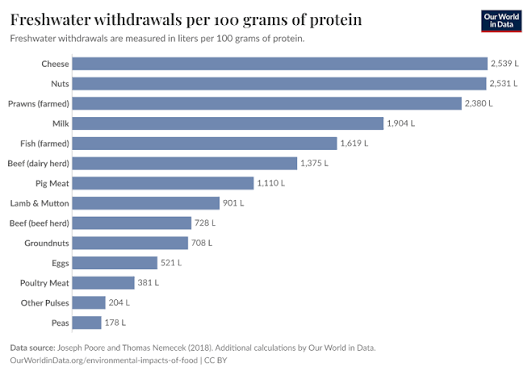
It takes around 2539 liters of water to create 100 g of protein from cheese, 1375 liters of water to create 100 g of protein from beef, but just 178 liters of water to create 100 g of protein from legumes
Care about our depleting water resources? Consume less meat, dairy, and eggs, or go fully vegan!
Fossil Fuels
I’m sure most environmentalists are already against fossil fuels for their polluting qualities, but let’s dive into how they deplete our precious water resources, too.
Water Info states that “Electricity production from fossil fuels and nuclear energy requires 190,000 million gallons of water per day, accounting for 39% of all freshwater withdrawals in the nation, with 71% of that going to fossil-fuel electricity generation alone. Coal, the most abundant fossil fuel, currently accounts for 52% of US electricity generation, and each kWh generated from coal requires withdrawals of 25 gallons of water.” This is a growing problem as more people move to the Mountain West, which is already hurting for water. More energy demands while we stay on a fossil fuel grid means more water usage, too.
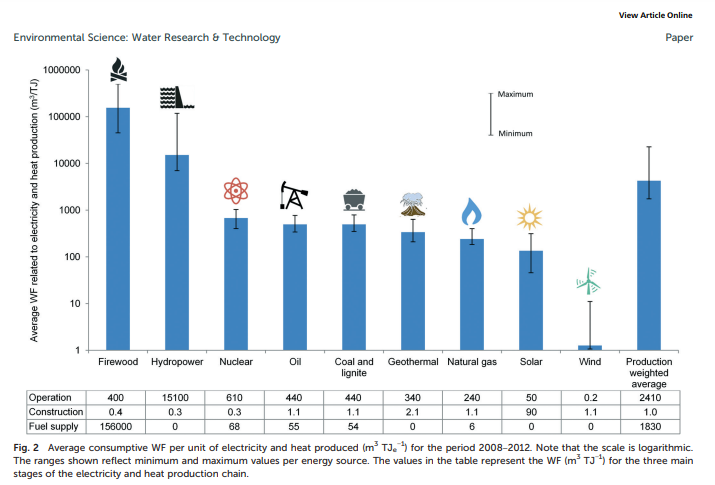
Another great reason to want to switch to green energy! Check out this chart that shows solar and wind being the best options for green energy sources that consume the least amount of water. Swap to green energy where you can and just conserve energyto use fewer fossil fuels at home.
Fast fashion
Still impactful to the planet, fast fashion’s water impact pales in comparison to animal agriculture. But agriculture plays into fashion, too! We grow cotton, hemp, and other plants to make our clothing.
Impact Buying states that “the global fashion industry consumes between 79 and 93 billion cubic meters of water annually—enough to fill roughly 37 million Olympic swimming pools and meet the yearly needs of over 110 million people.” This is around 4% of the world’s fresh water.
The most water-intensive clothing items are cotton (like shirts and jeans) and leather (like shoes, bags, and belts).
What you can do here is shop secondhand! When you shop secondhand, you’re preventing that item from going to the landfill and also lowering the demand for new items. We already have enough clothing on the planet to clothe several generations, so choose used! Here are other perks to shopping secondhand.
If you have to shop new, opt for things like recycled clothing, hemp, and tree-based fibers that are a bit better for water sources than leather and cotton. Also, try a small business vs a fast fashion giant…they do the most polluting.
Full video about the impact of fast fashion here…it goes far beyond water.
The Paper/Logging Industry
Paper is everywhere! Schools, offices, kitchens, and bathrooms for things like toilet paper and paper plates. We use a lot of it, and it takes a lot of water to get it to our homes.
According to the University of Minnesota, “The US benchmark for water use within pulp and paper mills is approximately 17,000 gallons/ton of paper, with one of the most efficient kraft pulp and paper mills only using 4,500 gallons/ton.”
Not only does the paper industry use a lot of water, but it also pollutes a lot of water. First, trees have to be turned into pulp using different sulfides, which creates hydrogen sulfide, H2S, as a harmful byproduct that also stinks. Bleaching tree fibers to get them stark white for sale requires many different chemicals that end up in nature at the end of the process. At the end of all of this processing, it can be a breeding ground for bacteria and even lead to eutrophication, or the dying off of many organisms, in waterways.
What can we do here? Recycle paper and shop for recycled paper! I use a lot of paper for my work and for school. When I have to buy new, I look for brands using recycled paper, which doesn’t contribute to this harm. Better yet, I look for notebooks and journals secondhand.
In the kitchen, I don’t use paper products:
Reusable plates and bowls replace paper ones
Reusable napkins take the place of paper ones
Reusable paper towels or simply rags are great for cleaning up, as opposed to paper towels
I still use toilet paper, but you could opt for reusable! Instead, I use a bidet to cut down my TP usage and opt for bamboo or recycled toilet paper.
You could also try digital notes, though we already covered the water impact of data centers. It’s not great either!

Grass/Non-Native Lawns
I hate grass lawns, and I hate golf courses for a number of reasons. But let’s stick with water for today.
The US EPA states that “nationwide, landscape irrigation is estimated to account for nearly one-third of all residential water use, totaling nearly 9 billion gallons per day.” That’s about 1/3, 33% of all residential water use in the US.
This is, unfortunately, more than data centers use per day. The UN estimates data centers collectively use around 1.2 billion gallons per day. I still think you should stop using AI for a number of reasons here, but you should also focus on your non-native grass lawn.
They use a lot of water, yes, but lawns also:
Don’t absorb water at the same rate as native plants, which may increase drought-like conditions.
They destroy biodiversity, which harms local birds, mammals, bugs, and other wildlife.
They often need fertilizer, which is made from petrochemicals and can harm humans and animals alike.
They need to be mowed, which uses fossil fuels and contributes to harming the planet in that way, too.
Let’s take care of the planet starting with our own backyards! Learn more about eco lawns here.
The Destruction of Marshlands
I did a full deep dive on marshlands in this video. I highly encourage you to check it out next.
It is SO important that we protect all ecosystems, but I think marshlands should be our top priority. Especially for water concerns! Here’s the short version of the benefit of marshes:
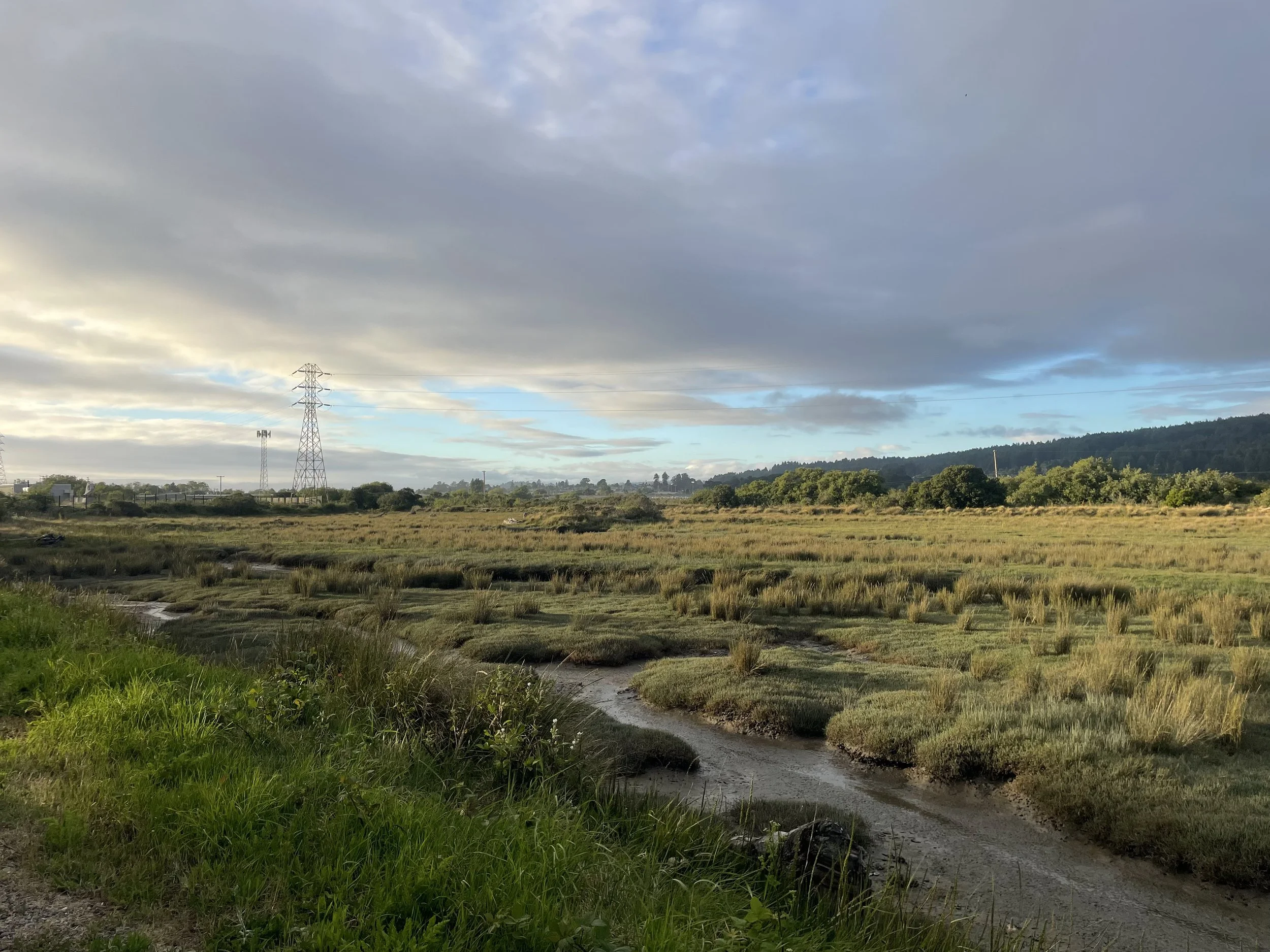
They CLEAN our water. My local marsh was built to treat human sewage. They can remove many of these pollutants from the categories above. Of course, that’s not an excuse to keep polluting, but they can help clean up those messes as we transition to more sustainable practices.
They stop erosion from the water and from the land. Erosion also leads to poor water quality, so halting this is a huge benefit.
Marshes act as sponges that help these depleting water sources. Early in the post, experts were saying that we may not be able to replenish our water sources. I think we can if we protect and restore our wetlands. They can hold so much water, even in drought-ridden areas!
And more! There are many more benefits to marshes that go beyond water conservation and pollution, so check out the video here.
Thank you for caring about the planet. If your first taste of environmental activism was standing up against data centers, thank you and welcome to this space.Learn more about how to be an activist here.
And thanks for reading this post that is likely controversial and unsexy and may not perform well. Your support via your reading, liking, and commenting helps boost this message. Please spread the word! I love to see people fighting for our right to clean water against data centers, but the fight doesn’t stop there. We have many wasteful industries to fix. We can do it together!
As always, remember that your small actions make a big difference in the long run :)
Emma
