

Zero Waste on a Budget: Kitchen Edition
I’m done with generic “zero waste on a budget” videos before, but what if we narrowed it down? Let’s talk about how to have an eco-friendly kitchen, but on a budget. You CAN save money while also saving the planet!
Regrow veggie scraps. This might take a little time, but you could have free veg from the scraps you have from things like spring/green onions, peppers, lettuce, celery, and more.
If you have a dishwasher, use it as opposed to hand washing dishes. Dishwashers are actually more water-efficient than using a sink!
Set your dishwasher to eco mode and/or use cool water or whatever temperature is closest to the natural temperature. It takes energy to heat and cool the water. Don’t forget to also ensure it’s full to maximize the energy and water usage.
If you don’t have a dishwasher, use one sink for wash water and one sink for rinse water, so you don’t have to run it the whole time.
If you have the time, it can be a bit time consuming, but make your own breads. I make my own sandwich breads, tortillas, flatbreads, rolls, and more. It is so much cheaper and so much less waste.
Use a little less of your products. What I mean is, you probably are using more than you need to for things like dish soap, hand soap, paper towels, and more. Make the things you own last longer to save money and reduce waste.
Make your own veggie broth from veggie scraps and if you eat meat, do the same with animal product scraps. There are many great recipes out there, but you really just need whatever veggie scraps YOU like: onions, garlic, carrots, celery, broccoli stems, parsley stems, you name it!
Spend some time meal prepping and planning so you don’t overbuy, and food doesn’t go to waste. I like to buy precisely what I need at the grocery store and limit my impulse purchases. Everything I bring home has a plan for the week and very little is wasted this way!
Turn citrus peels into your own low-waste, all-purpose cleaner. It does not sanitize, but it is great for wiping counters. You can check out the full tutorial/recipe here.
Don’t throw away your browning bananas. This is their most delicious state (imo) and is not worth being thrown in the ground! You can do banana bread, smoothies, granola bars, or simply freeze for later. I love to use frozen bananas to make banana ice cream!
Utilize food scraps more. You can candy orange peels, low roast apple skins for apple chips, juice fruit and veg that is about to go bad but still edible, and start eating spinach and broccoli stems. Just cut them up small enough that you can’t taste them (the flavor is still good, just not as good).
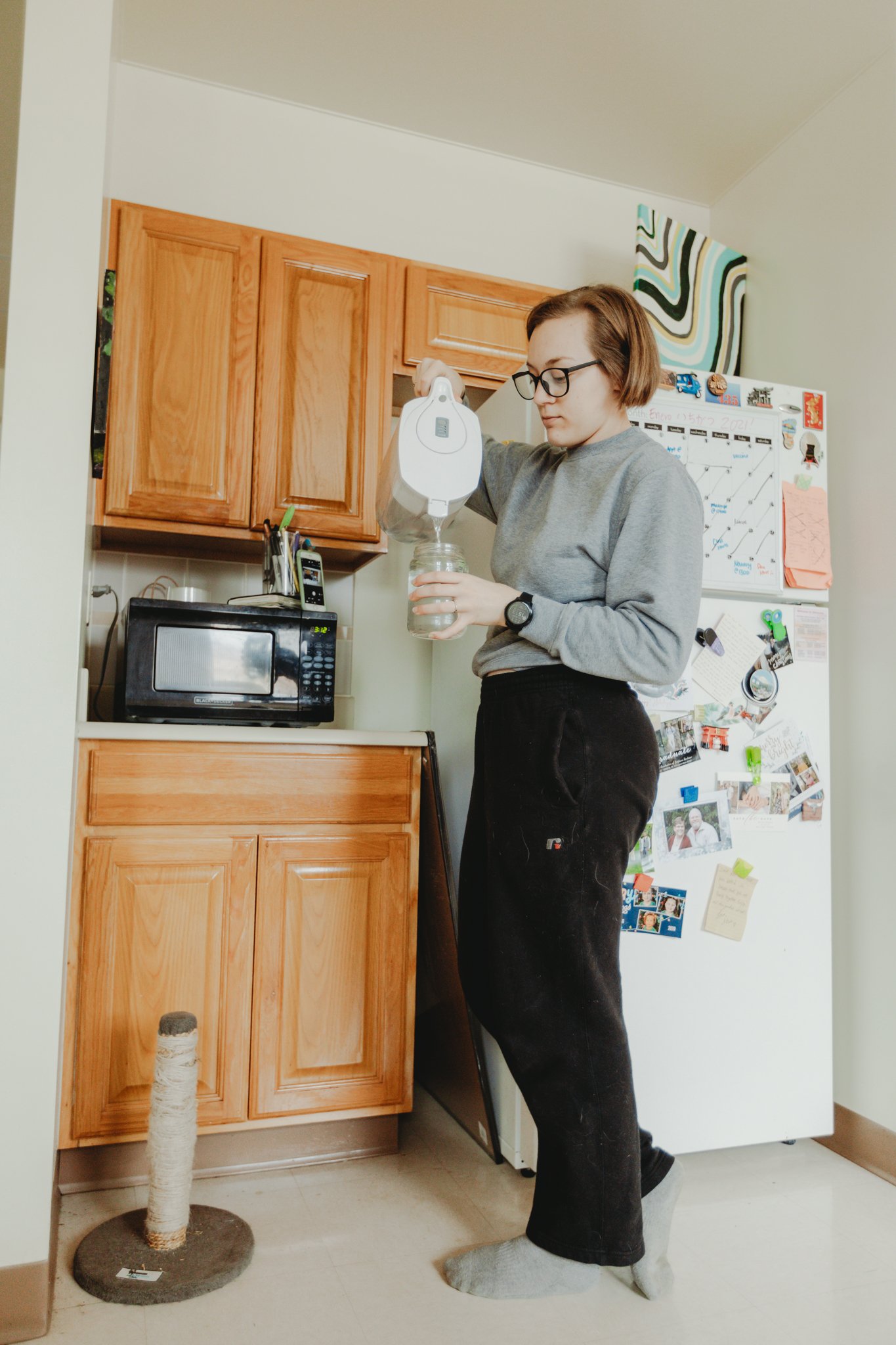
Don’t use hot water if you don’t need to, and leave it set to cold. Don’t even turn it on on the hot side and then change...this activates the hot water heater and will still turn it on the electricity and waste energy.
Turn off the oven and the stove before your things are “done.” The heat will still remain for several minutes, and your cookies will continue to bake, and your soup will continue to cook with no problem, but it will use less electricity
Similarly, don’t preheat your oven so early. Oftentimes, I preheat much too early, and then it’s sitting here at full temperature with nothing in it. Very wasteful. Now, halfway through prepping or even when I’m done prepping, is when I switch the oven on.
And my last oven tip, in the winter, prop your oven open when you’re done cooking and let that residual heat heat your home instead of using the furnace.
Reuse bags from bread and tortillas. I use tortilla bags as Zip-Lok bags (and keep reusing them and reusing them) and bread bags as dog poop bags. Freezer bags from things like frozen blueberries are also amazing to reuse AS freezer bags again!
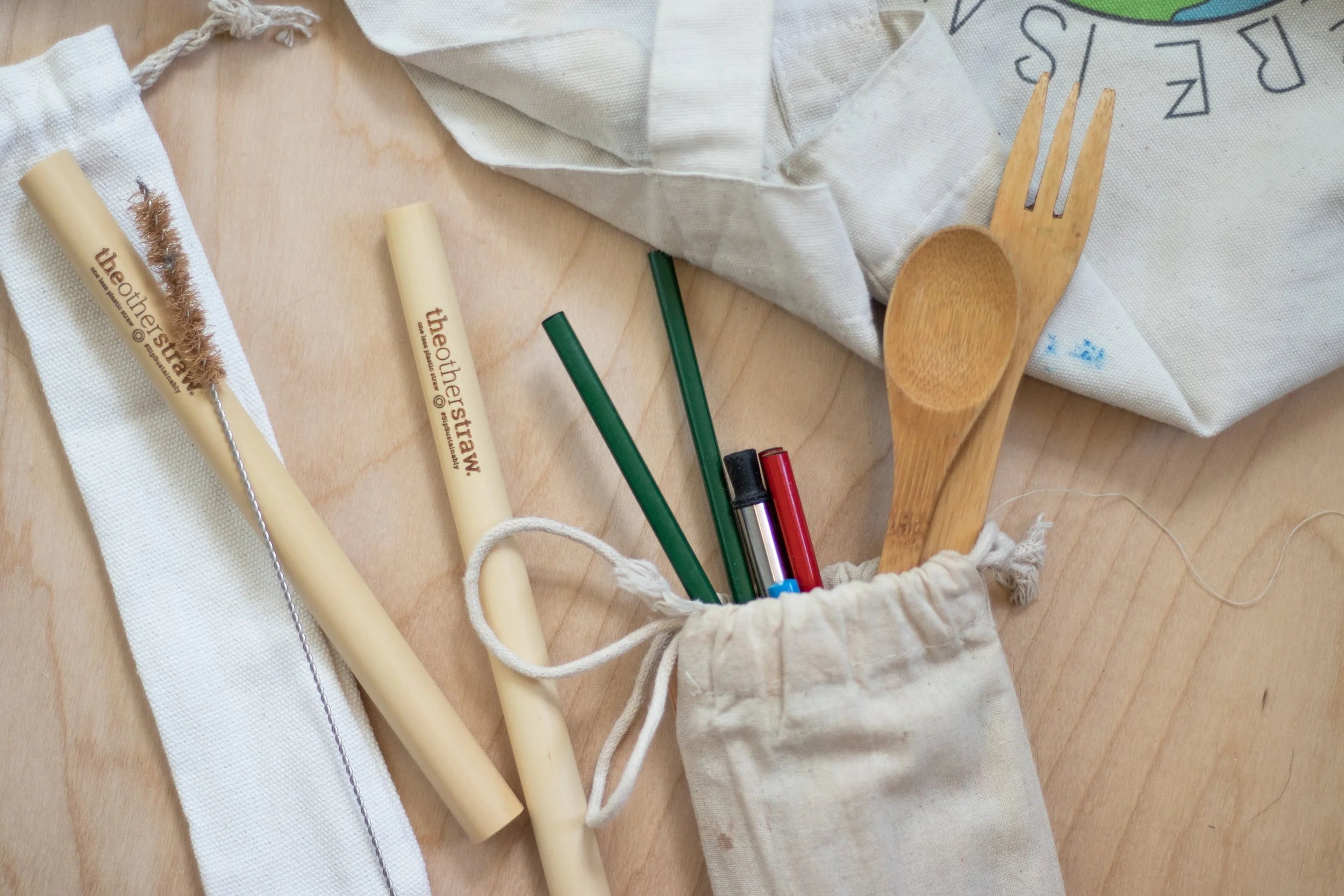
If you have reusable cutlery, water bottles, coffee cups, and that sort of thing, use them! If you already have them, then it’s completely free! Ditch the disposables where you can.
Turn stale bread into croutons, bread pudding, or bread crumbs instead of throwing it out. You can also use the heel of a loaf of bread to revive hard cookies or hard brown sugar. This part of the bread probably won’t get used anyway, so you get to save food from being wasted entirely two times!
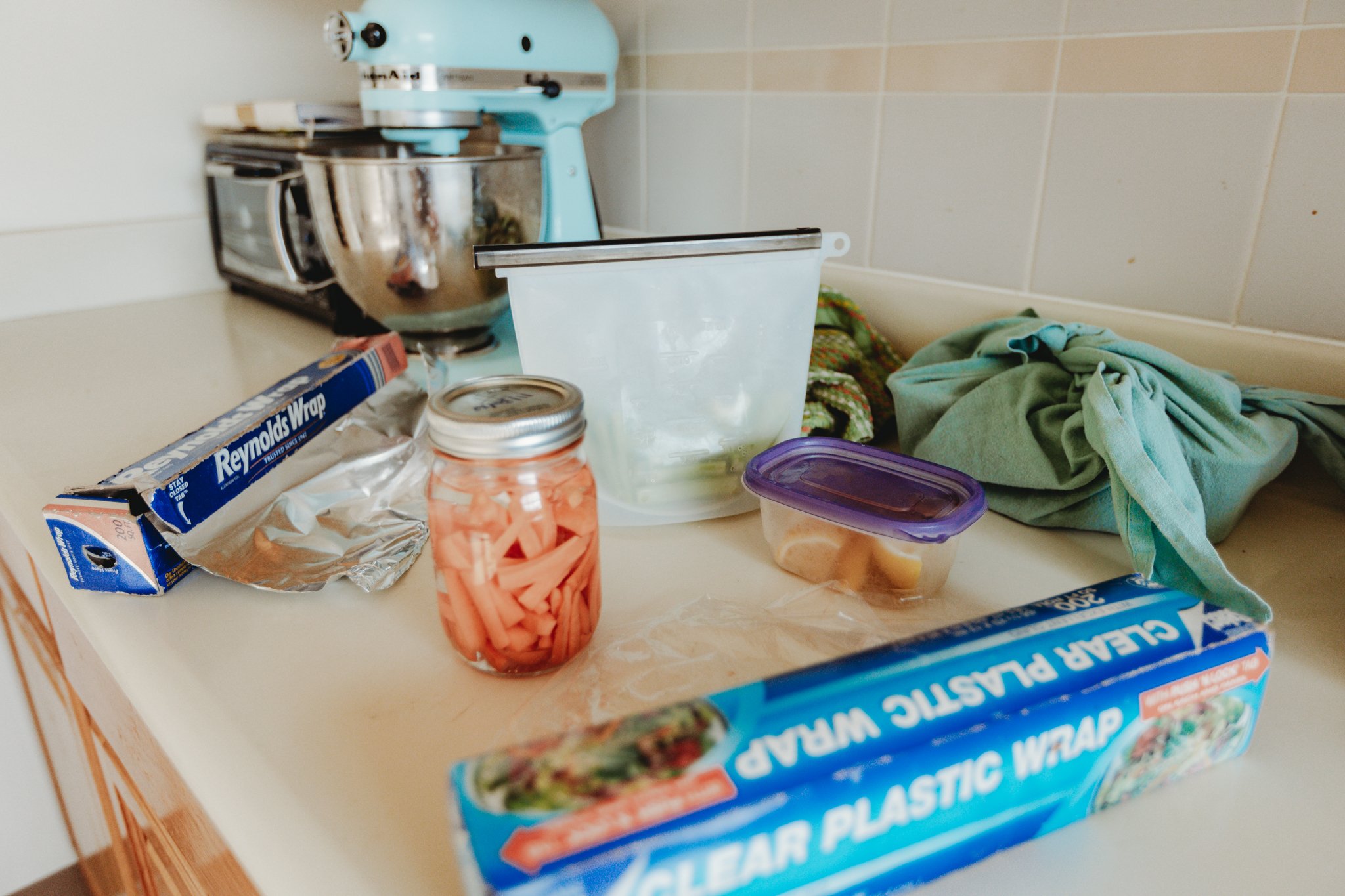
Avoid plastic wrap and tin foil, and just use cloth. For the most part, it works just as great if you just want to keep something for a few hours or days. If you are looking for something that will be better for the long haul, it’s not free, but reusable zipper bags are the way to go.
Eat your leftovers instead of throwing them away. I know so many people who just INSTANTLY threw them out, and honestly, it’s one of the things I hate the most. If you don’t like leftovers, make a plan so that you don’t make leftovers in the first place.
Move all older food to the front. What I mean is, when you buy new produce, place the new products in the back of the drawer and move the older stuff forward so you know to consume it first before it goes bad. And simply eat what you have before buying new food to avoid food waste. Designate a drawer or a box, or just put them up front, so you know to eat them first. While you’re here, shop your pantry before writing items on your grocery list to avoid buying repeat items.
Make your own plant milk since Tetra Paks are not recyclable! Oat milk is the easiest, most environmentally friendly, and the cheapest, but you can also do cashew milk, almond milk, or any other nut milk. Take it further and try your hand at homemade butter or mayonnaise!
Make other things from scratch, like brown sugar, granola, nut butter, and more! No, you don’t have to do it all. Do what works for you. Pick 1 or 2 you enjoy making and like the flavor of and stick to those for now.
Reuse rubber bands you get from produce.
Try cutting some meat out of your diet. Meat production is one of the leading causes of greenhouse gas emission from deforestation to shipping to water supply, and so much more. Simply making one vegan meal a week has an impact. Maybe even 2 or 3 or 4 times a week! Less meat is most likely also cheaper, if not the same cost, and has a great benefit on the environment.

When boiling water, only boil as much as you need. For example, when making tea in the kettle, I measure how much water I want and dump that in the kettle, versus warming up an entire pot. It’s quicker and saves a lot of energy. Also, make sure the lid is on when boiling water in any device. This traps the heat and allows it to come to a boil faster, which, of course, saves energy. Or use the microwave instead. Microwaves use much less energy than the stove or the oven. I’m not saying to never use those, but if you have a choice, choose microwave.
When cooking with canned foods like chickpeas, peas, corn, and the like, use the can’s liquid to sauté your veggies instead of fresh water. This is super small, but it of course puts that liquid to good use and saves some water, too. You can also save the water from a can of chickpeas as a vegan egg white replacer. It works really well in cookies!
If you steam veggies, eggs, or anything else, use that water again, or use it to water your plants.

If you already plan on drinking your tea or coffee cold, don’t make warm water just to let it cool down. Instead, cold brew them. Let them sit in the fridge overnight and it will be good to go in the am while saving electricity!
Got old coffee left in the pot? Pour it into ice cube molds and use it to make iced coffee. Saves product AND your iced coffee won’t get watered down.
Before putting something in the fridge, make sure it is cooled down first to room temperature. Things like leftovers. This way, your fridge doesn’t have to expend as much energy cooling down something hot, and can make your fridge more energy conscious. And don’t forget to clean the coils once or twice a year to keep it running efficiently. And while we’re talking about the fridge, keep it closed as much as possible. What I mean is, if you are pouring water, don’t leave it open while you pour the water. Shut it and close it again.
Reuse the oil from sundried tomatoes for sauteing.
Don't buy spice mixes (curry powder, Italian seasoning, etc) if you already have all the individual spices for that mix. Quit buying box mixes, too, for things like cakes, cookies, brownies, pancakes, etc. They contain unrecyclable plastic. Instead, just use flour, sugar, and other base ingredients from home (that most certainly come in paper). Then you can reduce waste and make even more delicious cakes!

If your veggies and fruits are beginning to go bad, freeze them for later, juice them to consume now, or just simply cut off the bad parts (use them for broth) and continue to eat as normal!
Apple cider vinegar is SO easy to make from scratch. It will reduce (rather, repurpose) food waste AND save packaging as you will no longer have to buy bottle after bottle of store-bought ACV. All you have to do is put some apple peels, apple cores, and other apple scraps in a jar and add water and sugar. For every cup of water, you add 1 tbsp of sugar. Mix with a wooden or plastic utensil, cover with a thin cloth or coffee filter, and let sit on the counter (away from pets and babies so it doesn't get knocked over) for 2-4 weeks, depending on how potent you want it. Strain and keep in your jar until it's gone! Works best with organic ingredients (but not necessary). Here’s the video!
Eat the stems of veggies, too. They are still nutritious and can be delicious when prepared and seasoned to your liking. I chop up spinach stems and add them to stir-fries or curries to bulk them up, and it tastes nearly like spinach itself. Same with broccoli stems, cauliflower leaves, and so forth. We often think of these as disposable or compostable, but they are edible! While yes, composting is great, we should still consume as much as possible before composting when it is not edible/usable.
Quit buying jars! There is no need to buy brand new jars when most common foods come in them: salsa, jelly, jam, peanut butter, pickles, kraut, and many more. I haven’t bought a brand new jar in years. If you don’t want to just keep jars (at least donate them), you can get so much glassware at thrift stores for a fraction of the price. They are complete free drinking glasses, storage, or bulk jars. Endless uses!

Feed veggie scraps to your pets/animals: chickens, goats, etc. My dog loves broccoli and kale stems, carrot and potato peels, and any produce that is about to go bad that I’m not going to eat, like brown bananas, pumpkin, apple, etc. Consult your vet and always check to make sure it’s safe for them!
Don’t add spices over the steam while cooking, as this can ruin the spices!
Eat the whole fruit or vegetable! You don’t really need to peel carrots, potatoes, or beets. Just wash and eat! It’s more nutritious and reduces food waste at the same time.
Find ways to reuse what’s left in the jar: pour milk into the last dregs of chocolate syrup to make another glass of chocolate milk; pull a shot of espresso into a strawberry jam jar for a fun latte flavor; make overnight oats in the nearly empty nut butter jar; reuse pickle brine in marinades or salad dressings; and so much more. Get creative!
I hope you enjoyed this one! Let us know how you live zero waste on a budget below, and don’t forget to check out the full playlist.
As always, remember that your small actions make a big difference in the long run :)
Emma
